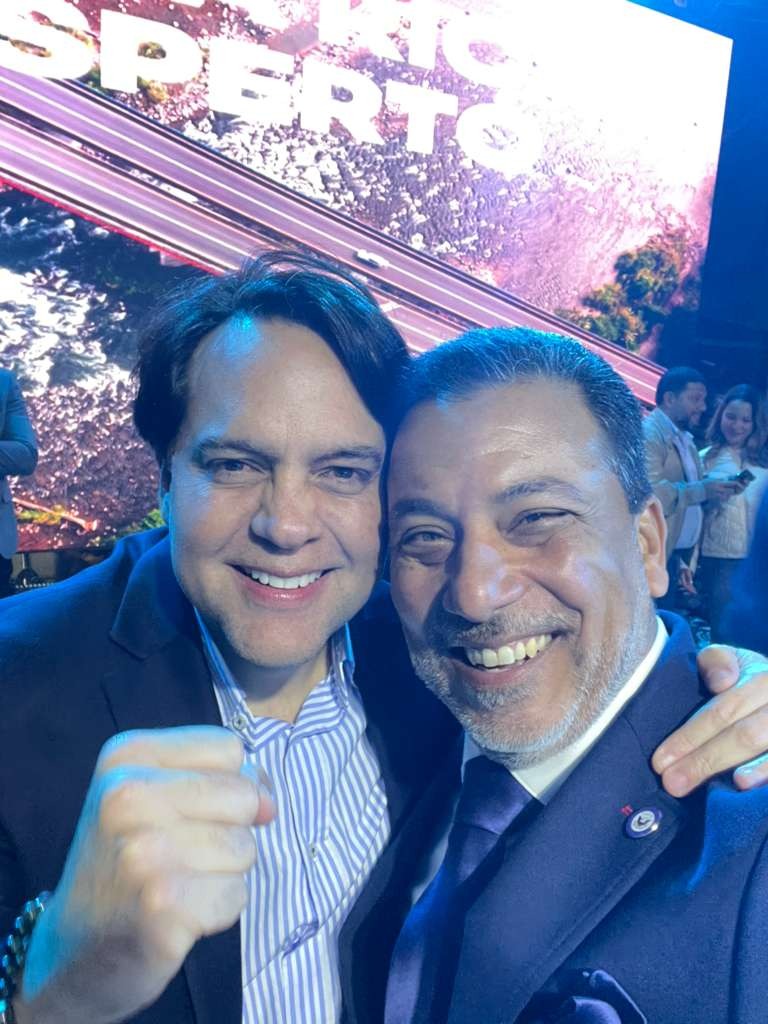
International entrepreneur and project developer Gabriel Bracho visited Costa Rica during the country’s recent national elections as part of an institutional observation and accompaniment agenda, joining public activities and dialogue spaces linked to the democratic transition process.
Bracho’s visit coincided with the electoral process that resulted in the election of Laura Fernández as President of the Republic, with Francisco Gamboa elected First Vice President and Douglas Soto elected Second Vice President. Election day was widely characterized by civility, respect for the vote, and institutional normalcy, with economic activity continuing and daily life largely uninterrupted.
In statements issued during his stay, Bracho congratulated the incoming authorities and highlighted Costa Rica’s democratic model as a pillar of national stability and international confidence.
“I would like to congratulate President-elect Laura Fernández and Vice Presidents-elect Francisco Gamboa and Douglas Soto,” Bracho said. “Costa Rica has once again demonstrated that it is possible to carry out a strong, peaceful, and orderly electoral process without disrupting daily life or economic activity.”
He contrasted the Costa Rican experience with election-day dynamics seen elsewhere in the region, arguing that predictable, rules-based transitions send a positive signal to citizens and investors alike.
“In many countries across Latin America, election days bring economic paralysis, business closures, and highly aggressive political confrontations,” he added. “In Costa Rica, the opposite occurs: democracy coexists with normalcy, dialogue, and institutional respect.”
Throughout the visit, Bracho held conversations with citizens, community leaders, and participants in the electoral process, sharing a comparative regional perspective focused on governance, civic coexistence, and the role of institutions in sustaining social cohesion. According to Bracho, credible electoral administration and broad acceptance of results are essential to preserving stability and reducing polarization.
He also emphasized the economic implications of democratic strength, noting that institutional reliability can lower risk perceptions and encourage long-term investment.
“Democratic stability is essential to building trust, attracting investment, and promoting sustainable growth,” Bracho said. “Costa Rica projects a level of institutional seriousness that deserves international recognition.”
Dialogue during the observation agenda centered on the importance of strong institutions and transparent procedures during moments of political transition. Participants discussed the value of civic education, citizen participation, and the need for ongoing communication between elected officials and civil society. Bracho said these exchanges reinforce a culture of democratic coexistence and help maintain continuity in public services, commerce, and community life.
Organizers described the trip as part of a broader institutional exchange and regional observation agenda aimed at better understanding Costa Rica’s challenges and opportunities within the Latin American landscape. Bracho said the country’s tradition of peaceful elections and civic engagement positions it as a regional benchmark, particularly at a time when many democracies face heightened tension and uncertainty.
Bracho concluded by encouraging continued dialogue among political actors and civil society during the transition period, calling for cooperation that prioritizes governability, economic continuity, and public confidence in democratic processes in the region.