

Entrepreneurs don’t change the world by waiting , they change it by deciding. Every year, a new wave of builders steps forward with sharper focus, higher standards, and a deeper hunger to create impact. The leaders on this list aren’t just chasing growth, they’re solving real problems, moving fast, and executing with purpose.
2026 will reward clarity, speed, and resilience. The entrepreneurs worth following now are the ones who combine strategy with psychology, they understand people, not just markets. They adapt quickly, learn relentlessly, and turn uncertainty into leverage. Watch how they think, not just what they sell.
Study their moves. Model their discipline. Let their stories raise your standards. Because proximity to the right minds, even through observation, can compress years of trial into months of progress. Success leaves clues. Follow them.
Grant Cardone

Grant Cardone is an American entrepreneur, real estate investor, sales trainer, author, and motivational speaker best known for building a personal brand around sales performance, entrepreneurship, and wealth creation. Born on March 21, 1958, in Lake Charles, Louisiana, he has become one of the most recognizable figures in the business-education and real estate investing space in the United States.
Cardone graduated from McNeese State University with a degree in accounting, though he did not pursue a traditional accounting career. Instead, he entered sales, beginning in the automotive industry, where he developed the techniques and philosophies that would later form the basis of his sales training programs. Early in his adulthood, Cardone has publicly spoken about overcoming substance abuse before rebuilding his life and career.
He went on to found several companies, including Cardone Training Technologies and Cardone Capital, the latter of which focuses on multifamily real estate investments. Through these ventures, Cardone expanded from sales consulting into large-scale real estate acquisition and private equity-style investment offerings. He has stated that his companies manage billions in real estate assets.
In addition to his business ventures, Cardone is a bestselling author and public speaker. His most well-known books include The 10X Rule, Sell or Be Sold, and If You’re Not First, You’re Last, the latter becoming a New York Times bestseller. He has also built a major online following through social media, digital courses, podcasts, and large-scale entrepreneurial events such as the 10X Growth Conference.
Today, Grant Cardone is widely recognized as one of the most influential and polarizing figures in the modern business and self-development space. Admired by many for his aggressive mindset and business success, he has built a global audience through his teachings on sales, investing, and entrepreneurship, while also drawing criticism from some observers for his highly promotional style and controversial public persona.
Emily Weiss

Emily Weiss is an American entrepreneur best known for redefining the modern beauty industry through community-driven branding. She first gained public attention by creating a beauty blog that featured interviews with industry insiders and explored everyday routines. The platform built a loyal audience and became a valuable source of consumer insight, helping Weiss understand how digital communities influence purchasing behavior.
Building on that audience, Weiss later founded a beauty brand that grew rapidly through direct engagement with customers. The company became known for its minimalist aesthetic and emphasis on natural beauty, appealing to a generation of consumers seeking authenticity. Media outlets frequently cited Weiss as a pioneer in the direct-to-consumer movement, highlighting her ability to transform editorial storytelling into a successful commercial venture.
After several years leading the company as chief executive, Weiss stepped down from the role to focus on broader strategic initiatives. The leadership transition was widely reported and marked a new phase for the business as it adapted to a more competitive marketplace. Analysts noted that the move reflected a common evolution for founders as companies mature.
Weiss remains an influential voice in conversations about branding, digital communities, and consumer engagement. Her entrepreneurial journey is often referenced in business schools as an example of how audience trust can evolve into brand loyalty. She continues to inspire new founders who seek to merge creativity with commercial strategy.
Neil Blumenthal

Neil Blumenthal is an American entrepreneur known for helping reshape the eyewear industry through a focus on accessibility and transparency. Before entering the private sector, he worked with nonprofit organizations that aimed to provide affordable vision care to underserved populations. These experiences shaped his understanding of how business can address social challenges while remaining financially sustainable.
Blumenthal later co-founded an eyewear company that introduced a direct-to-consumer model designed to lower prices and simplify the purchasing process. The brand gained widespread attention for challenging traditional retail markups and prioritizing customer experience. Industry experts frequently reference the company as one of the most successful examples of early digital-first retail innovation.
As a leader, Blumenthal emphasized company culture and long-term strategy, guiding the business through rapid growth and expansion into physical retail locations. His management style balanced profitability with social responsibility, reinforcing the idea that companies can create positive impact while scaling operations. Business publications often cite his work as a case study in ethical entrepreneurship.
Blumenthal continues to speak publicly about leadership, innovation, and corporate responsibility. He advocates for building organizations that prioritize both employees and customers. His career demonstrates how mission-driven strategies can drive sustainable success in competitive markets.
Whitney Wolfe Herd

Whitney Wolfe Herd is an American entrepreneur best known for her role in reshaping online social interactions through technology. She began her career in the tech industry at a young age, contributing to the development of major digital platforms that influenced how people connect. Her early professional experiences exposed her to both the opportunities and challenges of startup culture, shaping her leadership philosophy and long-term vision.
Wolfe Herd gained national recognition when she founded a dating platform designed to empower women by giving them greater control over online interactions. The concept introduced a new dynamic in digital dating, encouraging respectful communication and shifting traditional norms. The platform quickly attracted millions of users and became one of the most downloaded lifestyle apps in the United States.
In 2021, she became one of the youngest female CEOs to lead a company through an initial public offering. The milestone was widely covered in financial and business media, marking a significant moment for female leadership in the technology sector. Wolfe Herd has frequently spoken about the importance of building safer digital communities and fostering inclusive work environments.
Today, she remains an influential figure in entrepreneurship and technology. She actively participates in discussions about gender equity, innovation, and corporate responsibility. Her career reflects resilience, adaptability, and a strong commitment to redefining how technology shapes human relationships.
Alejo Giralt

Alejo Giralt is the founder of Bancus.io, a fast-growing fintech ecosystem built to help people around the world simplify, understand, and monetize digital assets. At a time when global finance is rapidly moving toward decentralization, tokenization, and community-powered adoption, Giralt has positioned Bancus as more than a fintech platform. He has helped build it into a global movement.
Under his leadership, Bancus.io has grown to more than 112,000 users across 180 countries, establishing itself as one of the most promising digital finance ecosystems emerging from Latin America. The company’s mission is clear: to become a daily financial tool for people worldwide by bridging the gap between traditional finance and decentralized finance.
What makes Giralt’s approach unique is his belief that the future of fintech will not be won by product alone, but by community. While many companies rely heavily on traditional sales models, Bancus has scaled through a community-driven strategy that turns users into active participants, educators, and ambassadors of the ecosystem. Through profit-sharing mechanisms and financial education, Bancus empowers individuals to not only use the platform but also help expand it globally.
Bancus stands out as one of the first fully tokenized DeFi ecosystems, powered by 300 million Banc tokens built on the Binance Smart Chain. This infrastructure supports transparency, scalability, and decentralized participation, allowing users across different markets to engage with digital finance in a more accessible way.
With a valuation exceeding $250 million, Bancus is rapidly positioning itself among the leading fintech companies in the digital asset space. The company is projected to surpass 350,000 users by the end of the year, placing it on a trajectory toward major global recognition.
For Giralt, Bancus is not simply about crypto, technology, or financial tools. It is about creating access. It is about helping everyday people understand a new financial era and giving them the systems, education, and community needed to participate in it. His vision is to make crypto monetization simple, scalable, and practical for users around the world.
As fintech continues to reshape the global economy, Alejo Giralt is emerging as one of the entrepreneurs to watch—an innovator building at the intersection of DeFi, community, education, and global financial inclusion.
Marilú Esponda Sada

Marilú Esponda Sada is redefining what it means to be visible in today’s leadership economy. A communication strategist, positioning consultant, and architect of personal power for high-level executives, she specializes in transforming accomplished yet overlooked leaders into recognized authorities within their industries. Her work operates at the intersection of strategy, influence, and visibility—where expertise alone is no longer enough to compete.
Before stepping into the spotlight, Esponda spent years behind the scenes shaping the narratives of institutions, brands, and high-profile leaders. With an MBA from IPADE and a doctorate, she built a career helping others communicate their value with precision. Yet, despite her credentials and experience, she remained largely invisible. That realization became a defining turning point.
Today, she uses that lived experience to help leaders ensure they are no longer “the best-kept secret” in their field. She is the founder of a strategic consulting practice focused on leadership positioning and communication across Mexico and Latin America. Her signature framework, Personal Power Architecture (PPA), is a 90-day methodology that reconstructs how leaders are perceived, what they communicate, and how they position themselves in competitive markets. Unlike traditional coaching models, her approach is grounded in structure, clarity, and measurable outcomes.
At the core of Esponda’s philosophy is a simple but often overlooked truth: talent without visibility is wasted potential. She has identified a consistent pattern among high-performing professionals—lack of clear positioning, difficulty articulating their value, and fear of visibility. Her work addresses these challenges with strategic rigor, replacing ambiguity with clarity and hesitation with intentional action.
Her insights have reached global stages, including TalentLand and the World Congress of Women Leaders at Harvard University, reinforcing her growing influence in the space of executive positioning and personal branding.
As she expands her reach across the United States and Latin America, Esponda is focused on scaling her methodology through Personal Power Group — a new venture designed to bring the PPA framework to leaders across industries and borders through strategic partnerships. She is also solidifying her presence as an international speaker, with a mission to help leaders build reputations that accurately reflect their value and open the doors they are qualified to walk through.
Her guiding principle is direct—power is not improvised; it is designed.
Daniel Lubetzky

Daniel Lubetzky is an American entrepreneur known for building businesses centered on social responsibility and ethical sourcing. Born in Mexico and raised in the United States, he developed an early awareness of cultural diversity and global markets. His background influenced his approach to entrepreneurship, emphasizing transparency and community impact.
Lubetzky founded a snack company that prioritized simple ingredients and clear labeling, responding to growing consumer demand for healthier options. The brand gained widespread popularity and expanded into international markets, becoming a recognizable name in grocery retail. His leadership style emphasized authenticity and long-term sustainability.
Beyond his role as a business leader, Lubetzky has been active in mentoring emerging entrepreneurs. He has appeared in public forums and media discussions where he encourages founders to align business goals with social values. His perspective highlights the importance of ethical decision-making in competitive industries.
Lubetzky remains involved in philanthropic initiatives aimed at promoting cross-cultural understanding and cooperation. His entrepreneurial journey reflects a commitment to creating businesses that contribute positively to society while maintaining financial success. He continues to influence conversations around responsible leadership.
Ben Silbermann

Ben Silbermann is an American entrepreneur best known for his contributions to visual discovery and digital inspiration platforms. He studied political science before transitioning into technology, where he developed an interest in how people collect and share ideas online. His early projects focused on creating spaces for creativity and personal expression.
Silbermann co-founded a platform that allowed users to curate images and ideas into organized collections. The concept resonated strongly with audiences seeking inspiration in areas such as design, fashion, and home décor. The platform grew rapidly, becoming one of the most visited websites in its category.
As a leader, Silbermann emphasized thoughtful product design and community engagement. He focused on maintaining a positive user experience while scaling operations globally. Business analysts often cited the company as a successful example of how niche digital communities can achieve mainstream appeal.
Silbermann has since transitioned into advisory and investment roles, supporting other technology startups. He continues to speak about creativity, innovation, and the role of digital platforms in shaping culture. His work remains influential in discussions about visual communication and online collaboration.
Sara Blakely

Sara Blakely is an American entrepreneur known for building a global apparel brand from a simple product idea. She began her career in sales, where she developed strong communication skills and an understanding of consumer behavior. Her determination and creativity played a key role in launching her business with limited resources.
Blakely gained widespread recognition after introducing a product that addressed common wardrobe challenges for women. The innovation quickly gained popularity, leading to national media attention and rapid growth. Her story of self-funding and persistence became a source of inspiration for aspiring entrepreneurs.
Over time, Blakely expanded her brand into new product categories while maintaining a focus on comfort and functionality. She has been recognized on numerous lists highlighting influential business leaders. Her leadership style emphasizes resilience, humor, and authenticity.
Beyond her entrepreneurial achievements, Blakely is active in philanthropy and mentorship. She supports initiatives aimed at empowering women through education and financial independence. Her journey illustrates how determination and creativity can lead to long-term success in competitive industries.
Ben Horowitz

Ben Horowitz is an American entrepreneur, investor, and author known for his influence in the technology startup ecosystem. He began his career as a software engineer and later moved into executive leadership roles, where he developed a reputation for navigating companies through periods of rapid growth and uncertainty. His early experiences in Silicon Valley shaped his understanding of both the technical and human sides of business leadership.
Horowitz co-founded several technology ventures during the early internet era, gaining firsthand experience with the volatility of startup life. He became known for his ability to manage companies through challenging market conditions, often making difficult decisions to ensure long-term sustainability. His leadership during economic downturns earned him respect among peers and positioned him as a trusted advisor in the tech community.
After transitioning from operating roles, Horowitz became a venture capitalist, where he focused on supporting founders through complex leadership challenges. He has emphasized the importance of resilience, culture, and transparency within organizations. His perspectives on management have been widely shared through lectures, interviews, and his published writing.
Horowitz continues to shape conversations around entrepreneurship, leadership, and innovation. He frequently speaks about the realities of building companies beyond the glamorous headlines, highlighting the emotional demands placed on founders. His influence extends across industries, making him a respected voice in modern business strategy.
Jessica Alba

Jessica Alba is an American entrepreneur who successfully transitioned from a career in entertainment to business leadership. Motivated by personal experiences related to family health and wellness, she became interested in creating consumer products designed with safety and transparency in mind. Her early efforts reflected a broader consumer shift toward more conscious purchasing decisions.
She later co-founded a consumer goods company focused on household and personal care products. The brand gained popularity for its emphasis on ingredient transparency and environmentally responsible practices. Alba’s involvement brought visibility to the growing demand for ethical consumerism, and her leadership helped the company expand its reach nationally.
As the business scaled, Alba took on a more active executive role, participating in strategic planning and public advocacy. She has spoken openly about the challenges of being a female founder in competitive industries, emphasizing persistence and adaptability. Her journey highlights the importance of aligning personal values with professional pursuits.
Alba continues to support initiatives related to sustainability and entrepreneurship. She is often invited to speak about brand-building, leadership, and the role of social responsibility in business. Her career demonstrates how public recognition can be leveraged to create meaningful commercial and social impact.
David Virzi
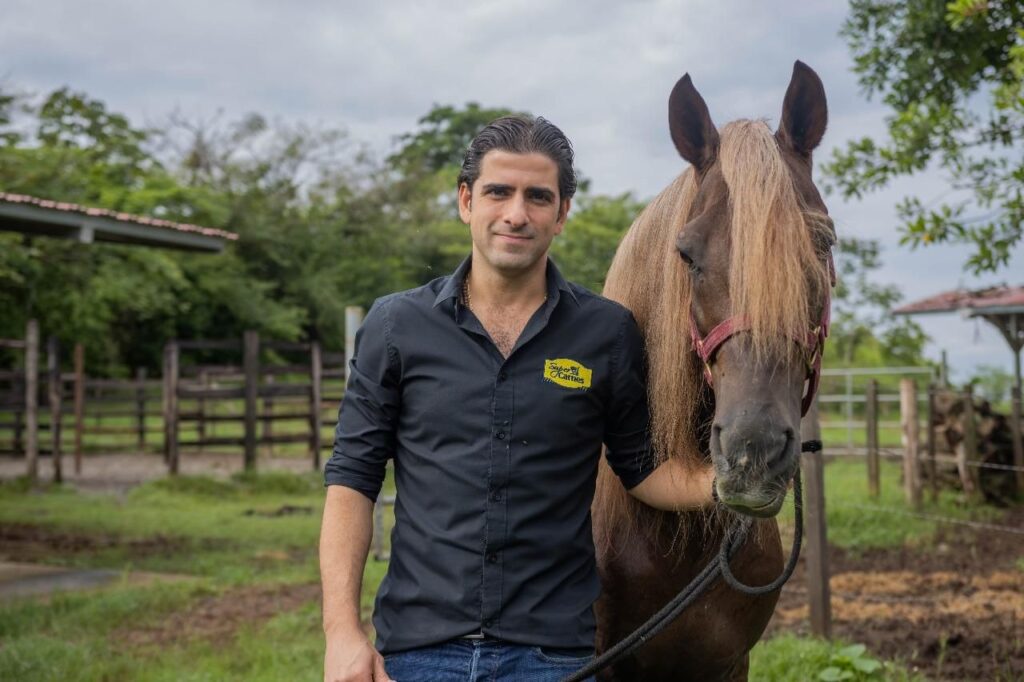
David Virzi is a visionary entrepreneur reshaping the landscape of food retail in Panama. As the force behind one of the country’s most transformative supermarket chains, David has built far more than a business—he’s leading a movement. Grounded in the principle of “from producer to consumer,” his model eliminates intermediaries, creating a direct bridge between small and medium-sized producers and end customers. The result? Fresher products, local economic empowerment, and a supply chain rooted in trust, traceability, and social impact.
What sets David apart in a competitive industry is his refusal to follow the traditional playbook. Instead of emulating multinational giants, he’s built a vertically integrated operation with multiple in-house production plants that span meats, dairy, bakery, coffee, and more. This level of control allows his company to innovate quickly, launch new products, and stay ahead of evolving consumer trends. While others react to change, David leads it.
His purpose extends well beyond profit. David envisions exporting this model beyond Panama, proving that it’s possible to scale without compromising social commitment. His company isn’t just feeding families—it’s supporting farmers, creating jobs, and inspiring the next generation of entrepreneurs. For David, true growth means everyone moves forward together.
As he looks to 2026, David is doubling down on expansion with new branches, increased production capacity, and a bold push into digital retail. From e-commerce to delivery and social media, he’s focused on translating the warmth and community of in-store experiences into the digital world.
David’s message to aspiring entrepreneurs is clear: success doesn’t happen overnight. It takes discipline, persistence, and the courage to be different. A good idea means nothing without action and intention.
Today, thousands benefit daily from the ecosystem David has built—an ecosystem rooted in values, driven by innovation, and guided by a deep sense of responsibility. In a world chasing scale, David Virzi is proving that relevance, purpose, and human connection are the ultimate competitive advantages.
Brian Chesky

Brian Chesky is an American entrepreneur recognized for reshaping how people think about travel and shared spaces. With a background in design, he approached business challenges through a creative lens, emphasizing user experience and community-building. His early career reflected a willingness to experiment with unconventional ideas.
Chesky co-founded a platform that allowed individuals to rent out their homes to travelers, a concept that initially faced skepticism. Over time, the idea gained widespread acceptance and evolved into a global hospitality model. The company’s growth sparked discussions about innovation, regulation, and the future of travel.
As a leader, Chesky focused on maintaining company culture while scaling internationally. He has spoken about the importance of empathy and adaptability in leadership, particularly during times of crisis. His management approach emphasizes transparency and continuous learning.
Chesky remains an active voice in conversations about entrepreneurship and innovation. He frequently discusses how design thinking can shape business strategy and consumer trust. His work continues to influence how companies approach community-driven platforms.
Reese Witherspoon

Reese Witherspoon is an American entrepreneur who expanded her career beyond entertainment into media and brand development. Her interest in storytelling and representation led her to pursue ventures that support diverse voices. She has emphasized the importance of creating opportunities for women in creative industries.
Witherspoon founded a media company focused on producing content that highlights female-driven narratives. The venture quickly gained recognition for its unique perspective and storytelling approach. Her leadership combined creative direction with business strategy, allowing the company to attract significant partnerships.
In addition to her work in media, Witherspoon has invested in fashion and lifestyle brands that align with her personal values. She has spoken about the importance of authenticity in building consumer trust. Her business ventures reflect a broader commitment to empowering women through entrepreneurship.
Witherspoon continues to advocate for diversity and inclusion across industries. She participates in leadership forums and mentorship initiatives that support emerging entrepreneurs. Her journey illustrates how creativity and business acumen can intersect to create lasting influence.
Daymond John

Daymond John is an American entrepreneur known for building a global fashion brand from modest beginnings. Growing up in New York City, he developed an early interest in marketing and design. His entrepreneurial journey began with small-scale clothing production that gradually gained popularity.
John’s brand expanded through grassroots promotion and strategic partnerships, eventually achieving national recognition. His success demonstrated the power of persistence and brand identity in competitive markets. He later became a prominent advocate for entrepreneurship through public speaking and mentorship.
In addition to his business ventures, John has played a significant role in supporting aspiring entrepreneurs through media platforms. He emphasizes financial literacy, branding, and resilience as key components of success. His experiences provide practical insights into building sustainable businesses.
John remains actively involved in philanthropic initiatives and educational programs. He continues to inspire new generations of founders by sharing lessons from his own journey. His career highlights the importance of adaptability and determination in entrepreneurship.
Melanie Perkins

Melanie Perkins is an entrepreneur known for transforming the way individuals and businesses approach visual communication. She developed an early interest in design and education, recognizing how complicated traditional tools could be for beginners. Her first ventures focused on simplifying creative processes for students, laying the groundwork for broader innovation in digital design platforms.
Perkins later co-founded a technology company aimed at making graphic design more accessible to non-professionals. The idea emerged from her experience teaching design software, where she noticed that many people struggled with overly complex systems. By prioritizing simplicity and collaboration, she helped build a platform that attracted millions of users worldwide.
As the company expanded, Perkins became known for her emphasis on culture and long-term thinking. She advocated for workplace values that supported creativity, inclusivity, and continuous learning. Business analysts frequently cite her leadership as an example of how mission-driven innovation can scale globally.
Perkins continues to influence conversations about entrepreneurship and digital accessibility. She is often invited to speak about leadership, resilience, and empowering individuals through technology. Her journey reflects how recognizing everyday challenges can lead to solutions with global impact.
Drew Houston

Drew Houston is an American entrepreneur best known for developing solutions that address everyday productivity challenges. He showed an early aptitude for technology, teaching himself programming during his teenage years. His curiosity about efficiency and organization later influenced his professional path.
Houston co-founded a technology company that simplified how people store and share digital files. The idea originated from his own frustration with forgetting important documents while traveling. The platform quickly gained popularity by offering convenience and reliability, becoming widely adopted by individuals and businesses.
As a leader, Houston emphasized adaptability and long-term strategy. He navigated the company through rapid growth while maintaining a focus on user trust and data security. His management style has been studied for its emphasis on resilience and continuous improvement.
Houston remains active in discussions about innovation and entrepreneurship. He mentors young founders and supports initiatives that encourage technological education. His career demonstrates how practical problem-solving can lead to large-scale business success.
Payal Kadakia

Payal Kadakia is an American entrepreneur recognized for her contributions to the wellness and lifestyle industries. She began her career balancing professional ambitions with her passion for dance, which played a significant role in shaping her entrepreneurial vision. Her personal experiences highlighted the challenges people face when trying to explore creative hobbies.
Kadakia later founded a platform that helped individuals discover local fitness and recreational activities. The service aimed to remove barriers between people and their interests, encouraging healthier and more balanced lifestyles. The concept resonated strongly with urban communities seeking flexibility and variety.
Throughout her leadership journey, Kadakia emphasized authenticity and personal fulfillment. She frequently spoke about the importance of aligning business goals with individual passions. Her perspective added a unique voice to conversations about entrepreneurship and work-life balance.
Kadakia continues to advocate for creativity and personal growth. She participates in public forums and mentorship programs that support young entrepreneurs. Her story reflects the value of building businesses that encourage both professional and personal development.
Robert Herjavec

Robert Herjavec is an entrepreneur known for his achievements in cybersecurity and technology services. Born in Croatia, he immigrated to North America with his family, where he learned the importance of perseverance and adaptability. His early experiences shaped his determination to succeed in competitive industries.
Herjavec began his professional journey in technology sales and gradually moved into entrepreneurship. He founded companies that specialized in information security, responding to growing concerns about digital safety. His ventures attracted attention for their innovative solutions and strong client relationships.
Over time, Herjavec became a public advocate for entrepreneurship through media appearances and speaking engagements. He shares insights on leadership, teamwork, and risk management. His approachable communication style has made him a recognizable figure in business education.
Herjavec continues to invest in emerging companies and mentor founders. He emphasizes the importance of trust and long-term planning in entrepreneurship. His career highlights how determination and adaptability can lead to sustained success.
Sophia Amoruso

Sophia Amoruso is an American entrepreneur known for her influence on modern retail and branding. She began her career experimenting with online sales, using digital platforms to reach niche audiences. Her early ventures demonstrated a strong understanding of storytelling and customer engagement.
Amoruso later built a fashion business that gained popularity for its distinctive aesthetic and community-driven marketing. The company’s rapid growth attracted media attention and positioned her as a new voice in entrepreneurship. Her leadership style reflected creativity and bold decision-making.
After stepping down from executive roles, Amoruso focused on mentoring and investing in startups. She has spoken openly about the challenges of scaling businesses and managing public expectations. Her transparency has contributed to broader conversations about resilience in entrepreneurship.
Amoruso continues to support initiatives that encourage female leadership in business. She participates in speaking engagements and collaborative projects that promote innovation. Her journey reflects the evolving nature of modern entrepreneurship.