House Votes to Roll Back Trump’s Canada Tariffs in a Rare Bipartisan Break With the White House
· 2 min read
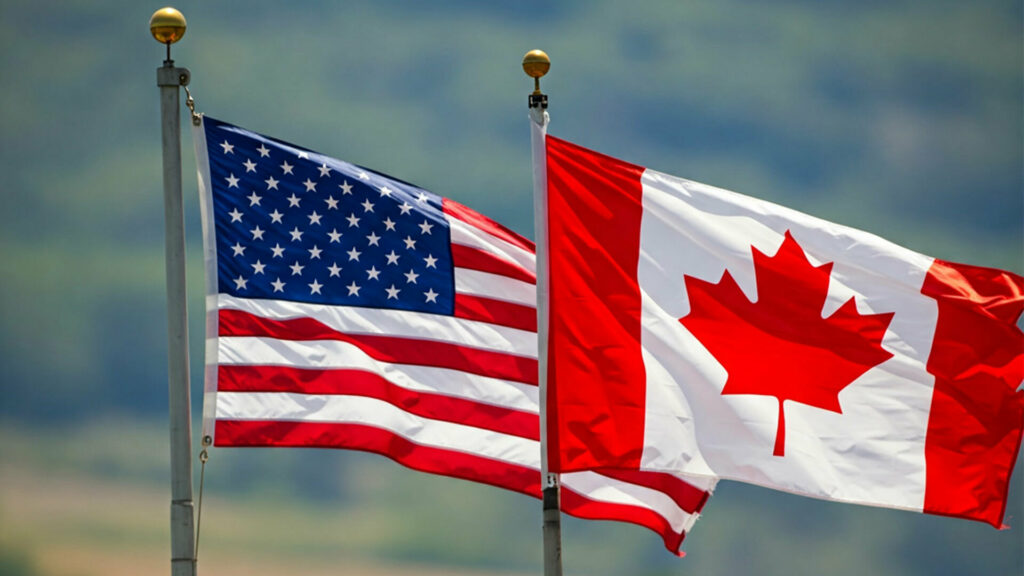
In a rare show of defiance toward Donald Trump, the U.S. House of Representatives voted 219–211 to approve a resolution aimed at ending tariffs the president imposed on Canada. The measure would terminate the national emergency Trump invoked to justify punitive duties on Canadian goods, sending the resolution to the United States Senate. While the vote is politically significant, it is unlikely to become law because Trump is expected to veto it and Congress would need two-thirds majorities in both chambers to override.
The vote exposed strains inside the Republican-led House. Six Republicans joined all but one Democrat to pass the resolution, even as Trump publicly warned that any Republican voting against tariffs would “seriously suffer the consequences” in future elections. The House’s narrow margins amplified the drama: Republicans hold only a slim majority, and GOP leaders had kept tariff challenges off the floor for months until procedural maneuvering collapsed.
The resolution was introduced by Representative Gregory Meeks, who argued that the tariffs are raising costs for American families and that Canada is “our friend” and “our ally.” Supporters cast the vote as both an economic statement—about lowering the cost of living—and an institutional one—about Congress reasserting authority over trade policy and checking what they see as overuse of executive power.
Republican leaders tried to delay or block the showdown. Mike Johnson pushed lawmakers to wait for a pending Supreme Court of the United States ruling tied to litigation over the tariffs and pursued a procedural strategy to prevent floor action, but the plan unraveled when enough Republicans broke ranks in earlier votes to allow the disapproval measure to advance. White House economic adviser Kevin Hassett signaled the administration would fight to keep the policy in place.
At the center of the dispute is Trump’s justification for the tariffs. Shortly after taking office for a second term in January 2025, Trump began a tariff fight with Canada, ordering 25% tariffs in February 2025 and later raising tariffs to 35% on Canadian goods not covered by the United States-Mexico-Canada Agreement. The administration linked the move to claims that Canada was failing to stop fentanyl smuggling. But both Canada’s government and the Drug Enforcement Administration have said fentanyl smuggled from Canada accounts for less than 1% of fentanyl on U.S. streets—an argument Meeks cited to dispute the emergency rationale.
Lawmakers’ economic concerns also loomed large. Members of Congress have been hearing complaints about higher prices for consumers and disruption for businesses tied to cross-border trade. It also cited external estimates of household costs from the Yale Budget Lab and the Tax Foundation, underscoring why some Republicans were willing to take political risk.
Even if the Senate passes the resolution, the fight now becomes a test of whether congressional pushback can meaningfully constrain tariff policy—or whether the episode remains mainly a symbolic warning shot in Washington’s broader debate over trade, executive power, and the political costs of confronting Trump.