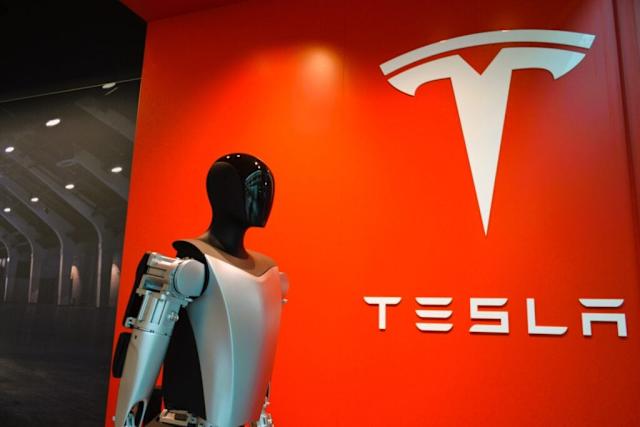
Tesla reported first-quarter results that beat Wall Street expectations and used the moment to signal an even bigger long-term investment push. The company said it now expects capital expenditures in 2026 to exceed $25 billion, a sharp increase from both last year’s spending and its earlier forecast of around $20 billion. This would amount to roughly three times Tesla’s capital spending in the prior year. The new guidance shows that Tesla is not responding to current investor pressure by becoming more cautious. Instead, it is doubling down on Elon Musk’s plan to transform the company beyond electric vehicles and into a broader artificial intelligence and robotics business.
That shift in spending priorities matters because it suggests Tesla wants investors to evaluate it less as a conventional carmaker and more as a technology platform. The expanded spending plan is a support for Musk’s ambitions to remake the electric-vehicle pioneer into an AI and robotics company. This helps explain why an earnings beat, on its own, was only part of the story. The bigger message was strategic: Tesla is willing to spend aggressively now in order to build the infrastructure, computing power, and product systems it believes will define its next chapter.
The headline itself makes clear that the results came in ahead of Wall Street expectations, and the company paired that with a much larger capital spending target. Taken together, those facts suggest Tesla used the earnings release not just to reassure investors on the quarter, but to reframe the conversation around future growth.
The investment increase also signals confidence in Tesla’s ability to fund its long-term projects, even as the company navigates a demanding operating environment. A plan to spend more than $25 billion in a single year is substantial by any standard, and it implies management believes the company has enough financial strength or strategic urgency to justify a much more aggressive pace of investment. Tesla sees those areas as core to its future identity rather than experimental side bets.
This is important because Tesla has spent years trying to convince investors that its value lies not only in selling electric cars, but in developing autonomous systems, humanoid robots, and broader AI capabilities. The new capital spending forecast appears to reinforce that narrative. If investors accept that framing, then a higher spending plan can be seen as a sign of ambition and leadership. If they remain skeptical, the same spending could raise fresh questions about execution, capital discipline, and how quickly those investments will translate into meaningful revenue.
The timing also matters. By announcing the increased investment alongside an earnings beat, Tesla appears to be using a moment of relative financial strength to justify larger bets on future technologies. That can help management argue that it is investing from a position of momentum rather than reacting defensively to weakness.
Overall, the quarter seems to have delivered two messages at once: Tesla performed better than expected in the near term, and it intends to spend much more aggressively on the technologies Musk believes will define the company’s future. The earnings beat may have helped calm immediate concerns, but the more consequential development may be Tesla’s decision to raise its 2026 investment target above $25 billion as it leans harder into AI and robotics.