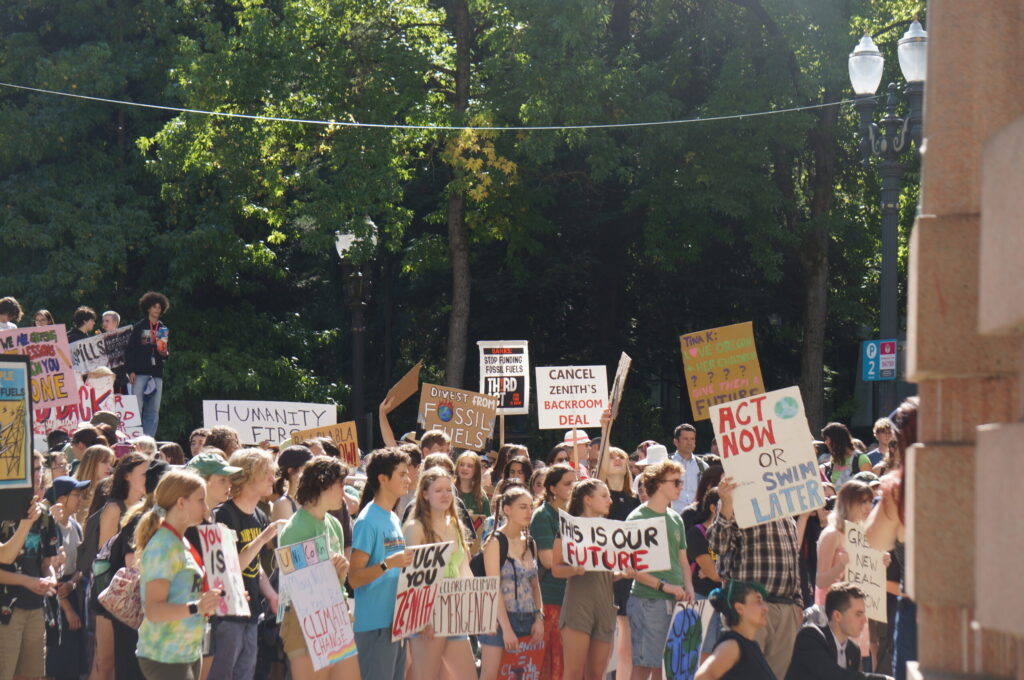
A group of 18 young Americans is asking a federal court to immediately block the Trump administration from dismantling some of the country’s most important climate pollution protections. The lawsuit, Venner v. EPA, challenges the administration’s repeal of the 2009 endangerment finding, the landmark Environmental Protection Agency determination that greenhouse gases endanger public health and welfare. That finding has served as the legal foundation for many federal climate regulations, especially rules limiting pollution from vehicles.
The plaintiffs argue that repealing the endangerment finding would cause grave and irreversible harm by allowing more climate pollution, worsening extreme weather, and threatening their health, safety, and futures. They also seek to stop the rollback of annual motor vehicle greenhouse gas standards, warning that the combined changes would dramatically increase emissions. Environmental advocates said the rollbacks could add an extra gigaton of carbon dioxide to the atmosphere, an amount larger than Japan’s annual emissions.
The case is significant because the young plaintiffs are using constitutional arguments, not only environmental law. They say the administration’s actions violate their rights to life, liberty, and religious freedom by worsening climate change and pollution in ways that directly affect their lives. Some plaintiffs describe asthma, climate-related health risks, damaged outdoor environments, and interference with religious or spiritual practices tied to nature. Their argument is that the government is not merely failing to protect them, but actively increasing danger by removing pollution limits.
The lawsuit comes after the Trump EPA moved in February to rescind the endangerment finding, calling it part of what President Trump described as the “single largest deregulatory action in American history.” The administration has framed the rollback as a way to reduce costs and regulatory burdens, while critics say it is a major gift to polluting industries and a direct attack on decades of climate and public health protections. The repeal could also undermine future rules for power plants and other major sources of greenhouse gases.
The youth lawsuit is part of a broader legal backlash. A coalition of 24 states, along with cities and counties, has already sued the Trump administration over the same repeal, arguing that the EPA’s action is illegal and contradicts scientific evidence and prior court rulings. Those lawsuits show that the fight over the endangerment finding has become one of the central climate-law battles of Trump’s second term.
The plaintiffs are supported by Our Children’s Trust, a nonprofit known for youth-led climate cases. The organization has pursued similar lawsuits arguing that governments violate young people’s constitutional rights when they knowingly support fossil fuel policies that worsen climate danger. There is one related youth case, led by Montana activist Eva Lighthiser, challenging pro-fossil-fuel Trump executive orders.
The legal path is difficult. Federal courts have often been skeptical of broad constitutional climate claims, and judges may hesitate to order sweeping changes to national environmental policy. Still, the plaintiffs are seeking an emergency court stay, hoping to freeze the rollbacks before they take full effect. That makes the case urgent: they are not only asking the court to declare the repeal unlawful, but to prevent immediate environmental harm while the lawsuit proceeds.
Overall, the case represents a generational challenge to Trump’s climate agenda. For the administration, the rollbacks are about deregulation, cheaper energy, and limiting EPA authority. For the young plaintiffs, they are about survival, public health, and whether the government can knowingly increase climate danger for future generations.