Zuckerberg Unveils Sweeping Vision to Put AI “Superintelligence” in Everyone’s Hands
· 3 min read
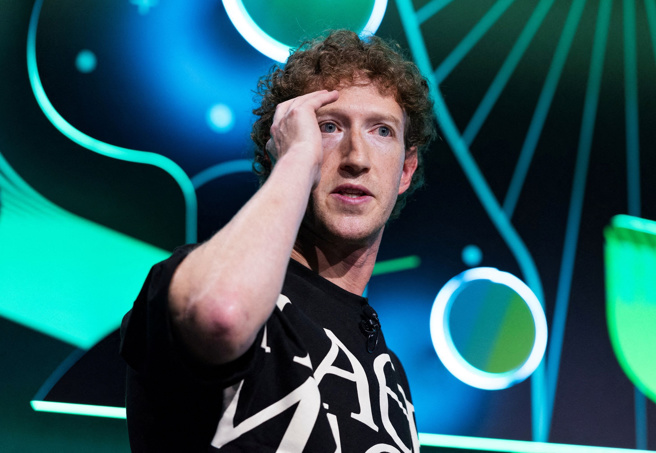
Mark Zuckerberg has laid out one of his most expansive visions yet for artificial intelligence, arguing that increasingly powerful AI should be broadly available to individuals rather than controlled by a small number of corporations or governments. In a roughly 6,500-word manifesto titled “The Future Is for Everyone,” Zuckerberg presents AI—and eventually what he calls personal superintelligence—as a technology capable of giving ordinary people unprecedented abilities to create businesses, learn new skills, solve problems and improve their everyday lives.
At the center of Zuckerberg’s argument is the idea that AI should primarily empower individuals. He envisions people having sophisticated personal AI assistants capable of understanding their interests, goals and surroundings. These systems could function as tutors, creative partners, business advisers and productivity tools, helping individuals accomplish tasks that previously required teams of specialists. Meta ultimately wants this intelligence integrated throughout its ecosystem, potentially including smartphones, applications and AI-powered smart glasses.
For Zuckerberg, the biggest danger surrounding advanced AI is not necessarily that the technology becomes uncontrollable. Instead, he argues that an equally important risk would emerge if a small number of companies or governments obtained excessive control over the most powerful systems. Concentrating AI capabilities, he says, could give those institutions enormous influence over what people can create, communicate and accomplish. His preferred alternative is distributing advanced AI widely and allowing individuals greater control over how their personal systems behave.
The manifesto also has a distinctly American geopolitical dimension. Zuckerberg argues that the United States should maintain its leadership in AI development and promote American values through technological innovation. He warns that excessive regulation could slow U.S. companies while China continues developing competing systems. His position echoes a broader argument across Silicon Valley that AI leadership has become a strategic competition involving economic power, national security and technological influence.
The essay coincided with Meta releasing Muse Glimmer, a new AI model that reinforces the company’s push toward making powerful technology more widely accessible. Zuckerberg has long championed relatively open AI development, contrasting Meta’s strategy with competitors that keep their most advanced models proprietary. The new manifesto extends that philosophy into a broader political and social argument: the benefits of advanced intelligence should not be reserved for governments, wealthy corporations or technological elites.
Zuckerberg also challenges predictions that AI will inevitably create permanent mass unemployment. He acknowledges that companies may become smaller because AI will allow fewer workers to accomplish more. But he predicts that new professions and businesses will emerge as individuals gain capabilities previously available only to large organizations. Small teams, for example, could use sophisticated AI agents to build companies capable of competing with much larger corporations.
Yet his optimistic vision arrives amid significant skepticism. Critics argue that Zuckerberg gives insufficient attention to problems including job displacement, surveillance, misinformation, cybersecurity and the enormous electricity requirements associated with AI data centers. There is also an inherent tension in having the chief executive of one of the world’s largest technology companies argue against excessive concentration of technological power.
Infrastructure represents another challenge. Building the computing systems required for widespread personal superintelligence will demand enormous investments in chips, data centers and electricity generation. Communities hosting these facilities have increasingly raised concerns about energy prices, water consumption and environmental impacts. Meta has responded partly by promising greater investment in communities surrounding its AI infrastructure.
Zuckerberg nevertheless portrays the current technological transition as comparable to previous breakthroughs that expanded individual power. He believes AI could accelerate scientific discoveries, personalize education, democratize entrepreneurship and provide ordinary people with what amounts to new intellectual and creative capabilities. His fundamental argument is that society should focus not simply on preventing AI risks but on ensuring that the technology’s benefits are broadly distributed.
Overall, Zuckerberg’s manifesto represents both a technological vision and a political argument about who should control the AI future. Meta is betting that personal superintelligence can become a mass-market technology rather than an exclusive resource controlled by a few institutions. Whether that vision produces widespread empowerment—or creates new problems involving privacy, employment, energy and corporate power—will be one of the central questions as the AI race accelerates.