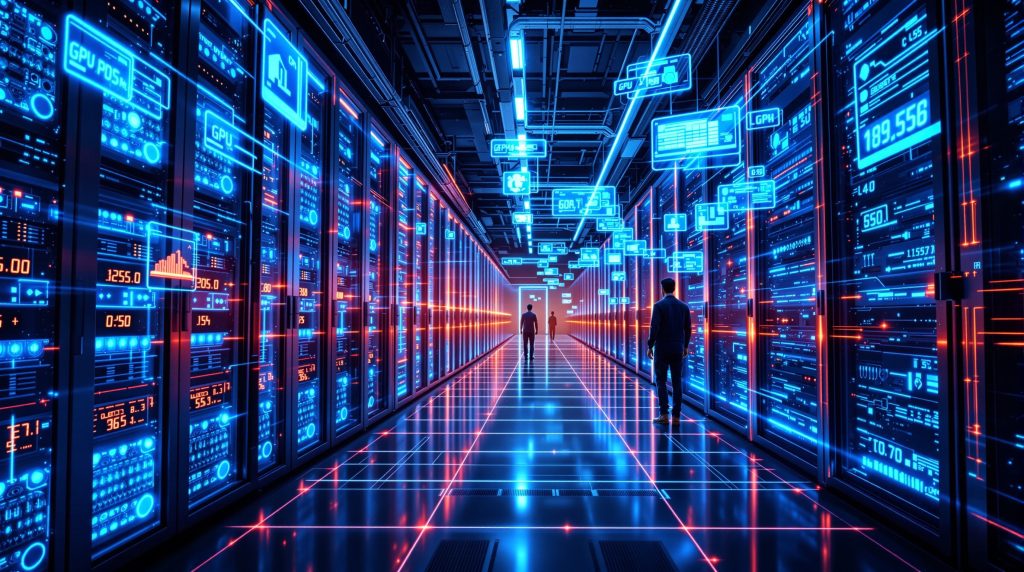
Meta has begun construction on a massive new data center campus in Lebanon, Indiana, committing about $10 billion as the company races to secure the computing power needed for advanced artificial intelligence. The site is designed to deliver 1 gigawatt (GW) of capacity once fully operational—an enormous scale that U.S. grid operators equate to roughly the power demand of about 800,000 homes. The company says the facility should come online in late 2027 or early 2028, and it intends to build rapidly to bring capacity online as quickly as possible.
The Indiana project reflects a broader tech-industry sprint to build “supersized” data centers as executives frame AI as a once-in-a-generation platform shift. Large language models and other AI systems require vast pools of specialized chips and high-bandwidth infrastructure, and data centers have become a strategic bottleneck—driving companies to lock in sites, power contracts, and construction pipelines years in advance. Meta has publicly positioned infrastructure as central to its AI strategy, and the Reuters report notes the company has said it will invest hundreds of billions of dollars in U.S. infrastructure and jobs over the next few years, with data centers as a major component.
A crucial element of the announcement is power. Data centers at the gigawatt scale can strain local grids, increase competition for electricity, and trigger expensive upgrades to transmission and generation. Meta’s vice president for data centers, Rachel Peterson, told Reuters the company already has agreements with local utility providers to supply electricity to the campus and that Meta is “paying our own way” for energy-infrastructure upgrades tied to the project. In other words, Meta is emphasizing that it will finance the build-out required to connect and support the facility rather than shifting costs onto other customers.
That messaging matters because the rapid expansion of data centers is drawing increasing criticism from environmental and consumer groups concerned about electricity demand, emissions, water use, and cost allocation. The Reuters story points to scrutiny around Meta’s even larger U.S. plans, including a separate megaproject in Louisiana: Meta previously announced a $27 billion financing deal with Blue Owl Capital for a 2-GW data center there, and an environmental law group has urged regulators to investigate whether parts of the financing structure could leave ordinary households and businesses paying for grid upgrades. Against that backdrop, Peterson said Meta would cover the full $10 billion investment upfront for the Indiana facility, while declining to detail additional financing plans beyond that.
Meta’s own announcement adds local economic framing: the company says the build is expected to support thousands of construction jobs at peak and hundreds of permanent roles once operating, alongside workforce programs and community support initiatives in the county.
Overall, the Indiana campus is both an AI capacity play and a signal of how the AI boom is reshaping U.S. industrial infrastructure: the competition is no longer just about software models, but about land, power, grid access, financing, and construction speed—factors that can determine who leads the next phase of AI development.