Florida Builds a New Coastal Conservation Network to Protect Marine Life and Strengthen Its Economy
· 2 min read
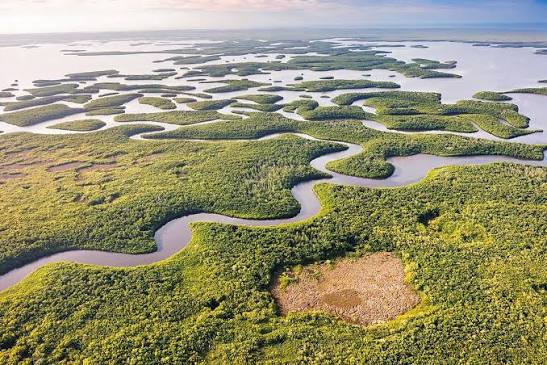
Florida is pursuing an ambitious new approach to marine conservation with a “coastal corridor” designed to connect restoration projects and protected habitats along its extensive shoreline. Inspired by the state’s successful land-based Florida Wildlife Corridor, the initiative seeks to create a more coordinated network for restoring vulnerable marine ecosystems while supporting the coastal economy that depends heavily on healthy waters.
The project is being advanced by the Florida Fish and Wildlife Conservation Commission and the Fish and Wildlife Foundation of Florida. Rather than establishing one continuous protected strip of ocean, the coastal corridor brings together a collection of conservation and restoration efforts, including artificial reefs, oyster beds, mangrove habitats and seagrass ecosystems. The objective is to connect projects that have often operated independently and build a broader strategy for improving the health and resilience of Florida’s marine environment.
The initiative arrives at an important moment for Florida’s coastal ecosystems. Marine species and habitats have faced mounting pressures from pollution, habitat degradation, warming waters and other environmental stresses. Manatees have suffered from the loss of seagrass, coral reefs have experienced severe bleaching, and oyster habitats have been damaged in parts of the state. Conservationists argue that restoring interconnected habitats could give marine wildlife stronger ecological support while helping damaged ecosystems recover.
Artificial reefs are an important component of the strategy. Projects are already being developed in areas including Collier, Okaloosa and Duval counties. These structures can provide habitat for fish and other marine organisms while potentially reducing recreational pressure on natural reefs. At the same time, restoration of mangroves, seagrass and oyster beds can strengthen coastlines, improve habitat and contribute to healthier marine ecosystems.
The coastal corridor is also closely connected to Florida’s economy. Recreational fishing alone generates approximately $14 billion annually and supports about 120,000 jobs. Tourism, boating, fishing and other coastal industries all depend to varying degrees on clean water, abundant wildlife and accessible marine environments. Protecting those natural resources is therefore being presented not simply as an environmental objective but as a long-term economic investment.
Another significant aspect of the project is collaboration. Organizers hope the corridor can unite government agencies, scientists, conservation organizations, local communities and private supporters around shared restoration priorities. Instead of treating individual reefs, estuaries or coastal habitats as isolated projects, the initiative encourages conservationists to consider Florida’s marine environment as an interconnected system.
The concept reflects a broader shift in conservation toward protecting ecological networks rather than isolated locations. Florida’s terrestrial wildlife corridor demonstrated how connecting habitats can give animals greater space to move and survive. Applying a similar philosophy to coastal waters could help restoration projects reinforce one another and create larger environmental benefits.
Success, however, will depend on sustained funding, scientific monitoring, cooperation and the ability to respond to continuing environmental pressures. The coastal corridor cannot eliminate threats such as rising ocean temperatures or pollution on its own. But supporters believe it could provide Florida with a more unified framework for confronting those challenges.
Ultimately, the project represents an attempt to align conservation with economic prosperity. By restoring marine habitats and strengthening coastal ecosystems, Florida hopes to protect its extraordinary biodiversity while preserving the natural resources that support billions of dollars in economic activity. If the model succeeds, it could also provide an example for other coastal regions searching for ways to combine ecological restoration, climate resilience and economic development.