George Lucas Reinvents the Art Museum by Putting Star Wars, Comics and Van Gogh on Equal Ground
· 3 min read
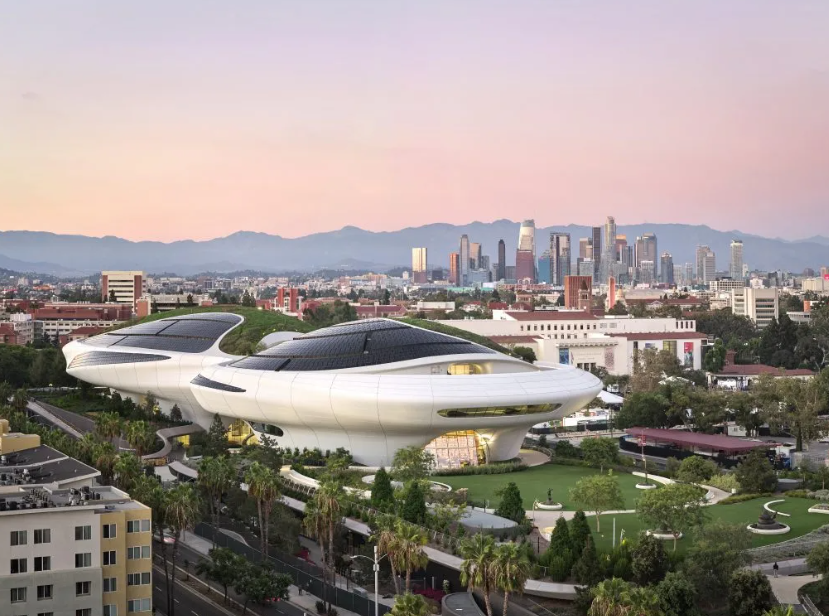
The long-awaited Lucas Museum of Narrative Art is preparing to open in Los Angeles with an unusually ambitious mission: challenge the traditional hierarchy separating prestigious “fine art” from illustration, comics, cinema, popular culture and other forms of visual storytelling.
Founded by filmmaker George Lucas and Mellody Hobson, the roughly $1-billion museum will open September 22 in Exposition Park after nearly two decades of planning, location battles, construction and delays. But the most consequential aspect of the project may not be its futuristic architecture or its connection to Star Wars. Instead, it is the museum’s attempt to redefine what deserves to be displayed—and respected—inside a major American art institution.
Lucas has assembled an enormous collection built around what the museum calls narrative art: images that tell stories.
Visitors will encounter works traditionally associated with prestigious museums alongside objects that conventional art institutions historically relegated to commercial illustration or popular entertainment. Paintings by Vincent van Gogh, Frida Kahlo and Norman Rockwell can coexist with comic-book art, manga, movie costumes, children’s illustrations and production materials from Star Wars.
The message is deliberate: there is no rigid hierarchy determining which forms of visual creativity matter most.
Lucas has long argued that illustrations and popular images can have enormous cultural significance because they communicate stories to millions of people. The museum consequently treats artists such as Rockwell and N.C. Wyeth—whose commercial illustration was historically regarded by parts of the art establishment as inferior to fine art—as important figures in visual culture.
That philosophy extends to contemporary popular culture.
A visitor could encounter Batman, Superman or manga imagery near works that would comfortably fit inside a traditional art museum. Star Wars artifacts, including costumes and production art, form part of the collection but do not dominate it. Lucas wants audiences to consider the creative process connecting these seemingly different objects rather than automatically ranking one above another.
This approach represents a challenge to the organizational structures that have shaped museums for generations.
Traditional encyclopedic museums commonly divide collections according to geography, historical period, artistic movement or medium. Paintings might occupy one department, photography another, decorative arts another and film or illustration somewhere entirely different.
The Lucas Museum instead organizes much of its collection around stories and themes.
That allows objects created centuries apart—and for completely different purposes—to interact inside the same galleries. Rather than asking visitors primarily to understand where an artwork belongs within art history, the museum encourages them to consider what story the image communicates and why humans created it.
Los Angeles is becoming an especially important laboratory for this philosophy.
The recently transformed Los Angeles County Museum of Art has also challenged traditional curatorial divisions. Its new David Geffen Galleries were conceived without the conventional departmental hierarchy that separates artworks strictly according to geography and chronology.
The two institutions therefore represent different versions of a similar question: Does the traditional structure of the encyclopedic museum still make sense?
Lucas’s approach remains controversial.
Critics have questioned whether “narrative art” is coherent enough to function as a museum category and whether eliminating traditional distinctions risks ignoring important differences between commercial imagery, historical artifacts and fine art.
Supporters see precisely the opposite possibility.
Removing those boundaries could make museums more accessible to audiences who may feel intimidated by traditional art institutions. Someone attracted by Star Wars, comic books or manga might unexpectedly encounter Kahlo, Rockwell or other artists—and begin making connections that a conventional museum layout would never encourage.
That democratizing impulse is central to Lucas’s vision. He has described visual storytelling as something fundamental to civilization because stories create shared cultural experiences and help societies understand themselves.
The museum’s collection ultimately asks visitors to reconsider who gets to decide what qualifies as important art.
For generations, museums, critics, collectors and academic institutions exercised enormous influence over those judgments. The Lucas Museum proposes something substantially more egalitarian: an image’s cultural importance does not necessarily depend on whether it was created for a gallery, a newspaper, a movie screen or a comic book.
Whether other museums embrace this philosophy remains uncertain. Traditional categories provide valuable historical context and scholarly organization that cannot simply be discarded.
But Lucas’s museum is introducing a provocative alternative.
Instead of asking whether Darth Vader belongs in the same institution as Van Gogh, it effectively asks: Why did the art world decide they should be separated in the first place?
If audiences embrace that question, the Lucas Museum could become more than an extraordinary personal collection. It could help accelerate a broader transformation in how museums define art, organize history and decide which forms of visual culture deserve a place on their walls.