Historic Flooding Devastates America’s Four Corners Region as Hundreds Are Rescued and Damage Could Reach $300 Million
· 3 min read
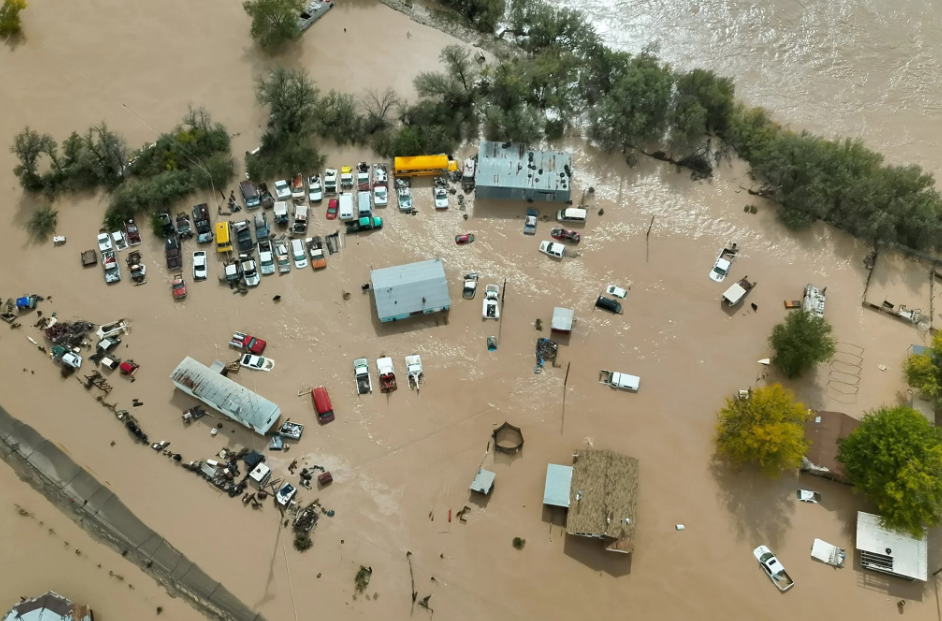
Severe flooding has devastated communities across the American Southwest, forcing hundreds of residents from their homes, destroying property and leaving emergency crews struggling to reach isolated neighborhoods as more rainfall threatens the region.
The disaster has affected the Four Corners area, where New Mexico, Colorado, Utah and Arizona meet. Days of intense rainfall have transformed normally dry landscapes into dangerous waterways, pushing rivers beyond their banks and overwhelming roads, homes and public infrastructure.
New Mexico Governor Michelle Lujan Grisham warned that damage in her state alone could reach $300 million, reflecting the enormous costs of rebuilding communities and restoring essential services.
The flooding intensified after several days of heavy rainfall beginning October 21. The San Juan and Animas rivers rose dramatically, inundating neighborhoods and forcing emergency evacuations in communities including Farmington, New Mexico, and Pagosa Springs, Colorado.
In San Juan County, New Mexico, authorities reported rescuing approximately 200 to 300 people during the disaster. Emergency teams used helicopters, boats and specialized vehicles to reach residents trapped by rising water.
Some people were rescued from rooftops, while others were stranded after roads and bridges became impassable. In Colorado, National Guard personnel and local rescue teams worked to reach isolated households as floodwaters damaged transportation routes.
Although river levels began receding in some locations, officials warned that dangerous conditions could continue long after the heaviest rainfall ended.
At least two deaths were reported in New Mexico. In Santa Fe, 39-year-old Isabelle Beulaygue was swept away while attempting to cross a flooded arroyo in a vehicle. Authorities said the tragedy occurred during a rescue involving a family caught in rapidly moving water.
Farther south, in Socorro County, 64-year-old Grace Clark died after floodwaters trapped residents in their homes. Emergency responders rescued nine additional people during the operation. The fatalities highlight the dangers of flash flooding, particularly in desert environments where water levels can rise suddenly.
Officials continued urging residents to avoid flooded roads and waterways, emphasizing that even shallow-looking water can conceal powerful currents. In southeastern Utah, the small town of Bluff experienced extensive flooding as the San Juan River surged through surrounding communities.
Mayor Josh Ewing described neighborhoods where floodwaters spread across the desert landscape, damaging homes and businesses. By October 26, flooding had affected at least 17 homes and five businesses in Bluff.
The community’s approximately 250 residents faced uncertainty as forecasters warned that additional rainfall could arrive later in the week.
The Navajo Nation also experienced significant damage across areas of Arizona, New Mexico and Utah. Flooding disrupted transportation and damaged wastewater infrastructure, creating concerns about possible contamination of the San Juan River.
As floodwaters receded, emergency officials warned residents about hidden dangers. Damaged wastewater facilities released sewage into waterways, while debris, unstable structures and damaged utility lines complicated recovery operations.
In Montezuma Creek, Utah, wastewater treatment lagoons were breached, raising concerns about bacteria and other pathogens entering the San Juan River. Authorities urged residents to avoid contact with floodwater and follow official instructions before returning to evacuated properties.
The contamination threat could complicate cleanup efforts and increase the cost of restoring affected communities. President Donald Trump announced federal disaster assistance for New Mexico on October 26, with the state responsible for a 25% matching share under the announced arrangement. Governor Lujan Grisham said state resources would be mobilized to support immediate recovery while officials assessed the broader damage.
The estimated $300 million in potential losses includes debris removal, infrastructure repairs and longer-term rebuilding. For displaced families, the disaster has created immediate challenges involving housing, employment, transportation and access to essential services.
Meteorologists linked the unusual rainfall to repeated storms carrying Pacific moisture into the Southwest, with saturated ground increasing the risk of further flooding. Forecasters warned that additional storms could arrive before communities had recovered from the initial disaster.
The Four Corners flooding demonstrates how extreme rainfall can rapidly overwhelm communities, creating humanitarian emergencies and costly infrastructure damage even in regions traditionally associated with dry climates.