House Defies Trump to Extend Temporary Protections for Haitians Facing Deportation
· 2 min read
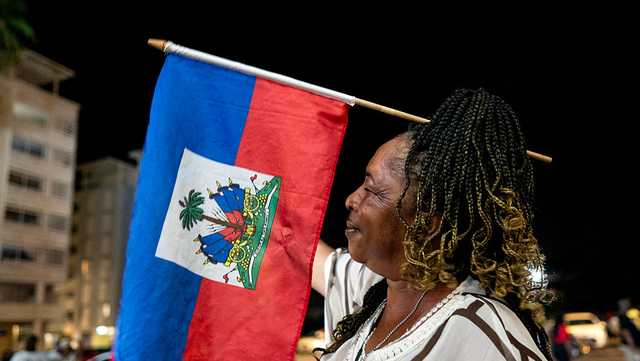
The U.S. House of Representatives delivered a rare setback to President Donald Trump’s immigration agenda by voting to extend Temporary Protected Status, or TPS, for roughly 350,000 Haitians living in the United States. The House approved the measure by a vote of 224 to 204, with ten Republicans and one independent joining Democrats in support. The bill would allow Haitians to remain eligible for TPS for three more years after the Department of Homeland Security moved to terminate those protections.
The vote is notable not just for its outcome, but for how unusual it is politically. Trump’s administration has made restricting humanitarian protections a central part of its immigration crackdown, and DHS has moved to end TPS for 13 countries on the argument that the program was always meant to be temporary and should not become what officials describe as a “de facto amnesty program.” Against that backdrop, the House vote amounted to a direct challenge from a small but significant group of Republicans willing to break with the White House on Haiti.
TPS is a humanitarian immigration status available to people whose home countries are facing extraordinary dangers such as armed conflict, natural disasters, or major instability. It gives eligible migrants temporary protection from deportation and permission to work in the United States. Haitians were first granted TPS in 2010 after a devastating 7.0-magnitude earthquake struck the country. Since then, the status has been repeatedly extended by successive administrations, most recently by the Biden administration in July 2024.
Supporters of the extension argue that conditions in Haiti remain far too dangerous for large-scale forced returns. More than 1.4 million Haitians have been displaced by violence and instability, according to the International Organization for Migration. That statistic helps explain why backers of the bill framed the issue as an urgent humanitarian matter rather than a routine immigration dispute. For them, ending TPS now would expose hundreds of thousands of people to deportation to a country still in severe crisis.
The legislation reached the House floor through a discharge petition, a procedure that allows a majority of representatives to force a vote even if House leadership does not want one. Democratic Representative Ayanna Pressley of Massachusetts began the effort in December, after then-Homeland Security Secretary Kristi Noem took steps to terminate Haiti’s TPS designation. Because Republicans hold only a narrow House majority, Democrats have increasingly used this tool to win occasional votes over the objections of Speaker Mike Johnson.
Even with House passage, the future of the measure is still uncertain. Apparently, the bill now goes to the Republican-led Senate, where its prospects are unclear. At the same time, the issue is moving through the courts. A federal judge blocked the administration’s move to end Haiti’s TPS designation the day before it was set to expire, and the U.S. Supreme Court is scheduled to hear arguments on April 29 on whether the administration can proceed with ending TPS for Haitians and about 6,100 Syrians.
That means the House vote is both substantive and symbolic. Substantively, it could preserve legal protection for hundreds of thousands of Haitians if the Senate follows suit. Symbolically, it shows that even within Trump’s own party there are limits to support for hard-line immigration actions when the humanitarian stakes are so visible. The vote was an uncommon moment in which Congress, at least in one chamber, pushed back against the administration’s effort to narrow protections for vulnerable migrants.