JetZero’s Radical Blended-Wing Jet Takes Aim at Airbus and Boeing
· 3 min read
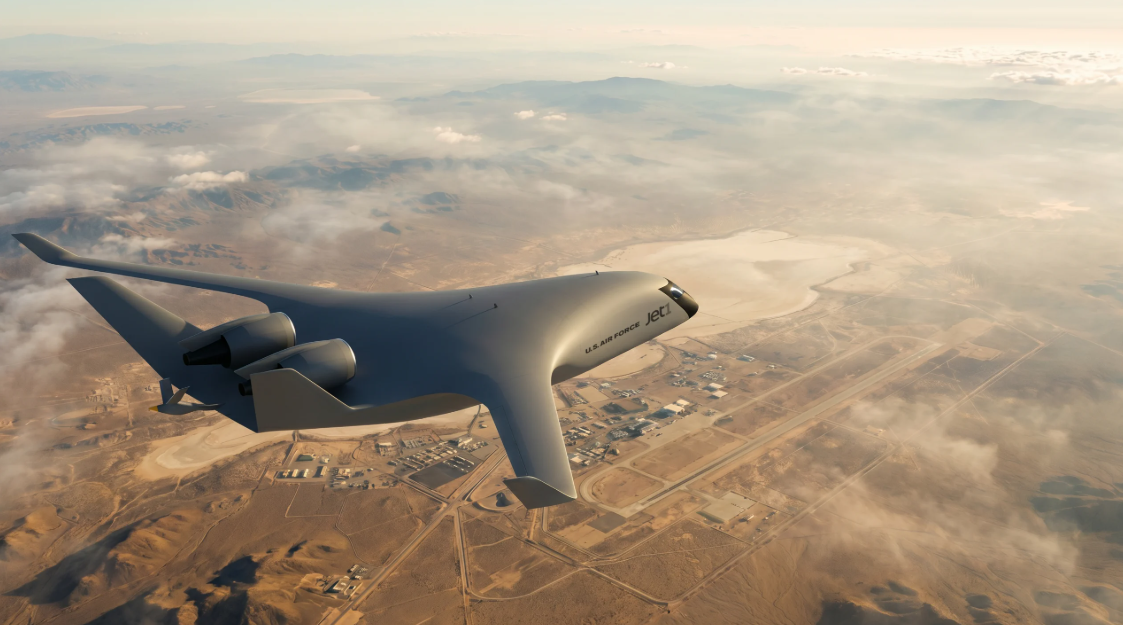
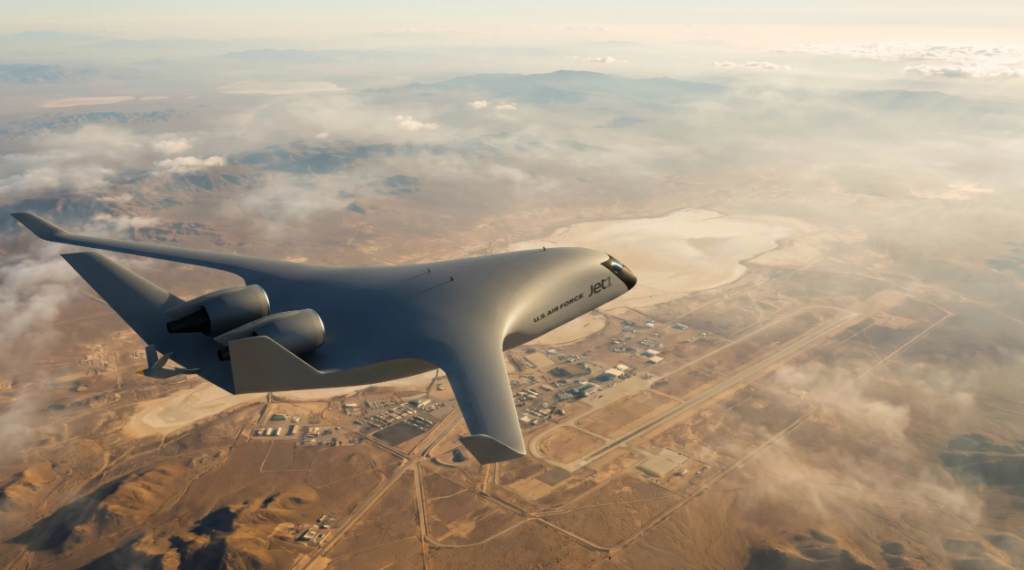
JetZero, a California startup working out of the Mojave Desert, is trying to do something few aviation newcomers seriously attempt: break into the commercial jet market dominated by Airbus and Boeing. The company is building a full-size demonstrator of a blended-wing-body aircraft, a design in which the fuselage and wings merge into one lifting surface rather than following the familiar tube-and-wing format. The aircraft is intended to target the “middle of the market,” a segment of 200-plus-seat jets long seen as strategically important for the next generation of airline competition.
The company’s pitch is built around fuel efficiency. JetZero says its manta ray-shaped design could cut fuel use by as much as 50%, a claim that has helped it attract early attention from airlines and investors. The concept has already drawn support from United Airlines and Alaska Airlines, while the demonstrator itself is partly funded by the U.S. Air Force and is being built by Scaled Composites, a Northrop Grumman-owned aircraft developer. The demonstrator uses Pratt & Whitney engines of the type that powered the Boeing 757, and JetZero aims to fly it by the end of 2027.
The effort matters because it goes after one of the most lucrative and strategically important parts of the jet market. JetZero’s planned Z4 aircraft would carry roughly 200 to 270 passengers on medium- to long-haul routes, filling the gap once served by Boeing’s 757 and 767 families. If it works, the design could offer airlines not only lower fuel costs but also quieter operation, thanks to engines mounted above the rear, and a more flexible cabin with different seating layouts, bigger windows, and reconfigured interior spaces.
But the hurdles are enormous. Aerospace analyst Richard Aboulafia said JetZero still has to prove the efficiency gains are real and then raise the billions of dollars likely needed to certify and mass-produce a commercial aircraft. Certification is especially difficult because the aircraft is unconventional, and regulators will need to be satisfied not only that it flies, but that it can be evacuated, maintained, and operated safely under real airline conditions. Only the cockpit of the demonstrator will be pressurized and that the fuel tanks will sit where passengers normally would, underscoring that the current aircraft is a test platform, not a near-finished airliner.
Skepticism remains strong inside aerospace. Analyst Bjorn Fehrm said the promised fuel savings have not yet been proven and argued that the design may be better suited for military use than for passenger service, since blended-wing aircraft naturally offer stealth, internal volume, and cargo or fuel capacity. That military angle is one reason the U.S. Air Force selected JetZero in 2023 for a $235 million, four-year demonstrator effort. The design could also be adapted for transport or aerial refueling, giving the project a second path beyond commercial aviation.
JetZero, founded in 2020, has nonetheless made real financial progress. In January it raised $175 million in a funding round led by B Capital, with participation from United Airlines Ventures, Northrop Grumman, and RTX Ventures. United’s investment includes a path to buy up to 100 aircraft, with options for another 100, if the concept proves viable. The company plans another funding round by year-end, and CEO Tom O’Leary said a public listing could follow by 2028. He also said that much depends on the demonstrator’s first flight: once it flies successfully, airlines may begin treating the concept as real rather than speculative.
JetZero represents one of the boldest attempts in years to rethink the shape of commercial aviation. The company is still far from proving it can challenge Airbus and Boeing, but it has moved beyond paper concepts into full-scale construction. If the demonstrator flies and performs as promised, JetZero could become a serious contender in a market that has long seemed closed to outsiders.