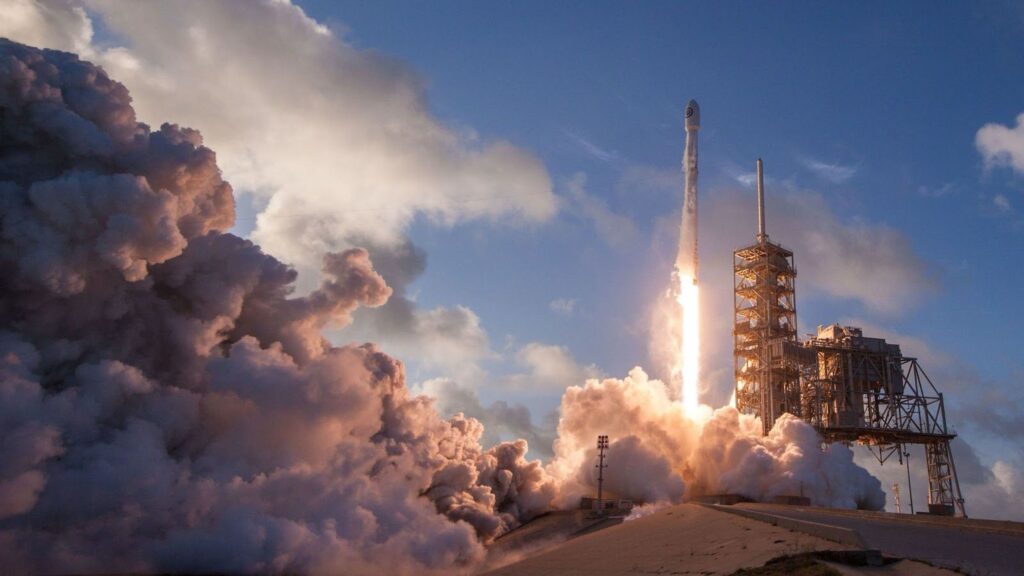
SpaceX launched its 12th long-duration crew rotation for International Space Station early Friday, February 13, sending four astronauts on an extended research stay in orbit. The mission—known as Crew-12—lifted off at about 5:15 a.m. Eastern from Cape Canaveral Space Force Station in Florida, using a NASA webcast that showed the vehicle rising into the pre-dawn sky.
Onboard the capsule are two U.S. astronauts—Jessica Meir, a veteran flyer and marine biologist, and Jack Hathaway, a first-time astronaut and former U.S. Navy fighter pilot—along with French astronaut Sophie Adenot from the European Space Agency and Russian cosmonaut Andrey Fedyaev from Roscosmos. Jessica Meir previously helped complete the first all-female spacewalk in 2019, an achievement referenced again as the crew began its journey.
The team rode a Falcon 9 rocket topped by a Crew Dragon spacecraft named “Freedom.” The booster executed its now-routine return and landing shortly after liftoff, while the upper stage placed the capsule into orbit for a roughly 34-hour chase to the station. NASA said the spacecraft is targeting an autonomous docking with the ISS’s Harmony module at about 3:15 p.m. Saturday, Feb. 14, while traveling around 17,000 mph in orbit.
Crew-12’s stay is expected to last about eight to nine months, during which the astronauts will conduct experiments in biology, medicine, and technology development in microgravity. Work on board included studies pneumonia-causing bacteria and investigating plant-microbe interactions that could support food production beyond Earth—research linked to future deep-space exploration goals. The crew will also test new medical capabilities, including advanced ultrasound approaches, reflecting the push to make crews more self-sufficient on longer missions.
The launch also comes after unusual turbulence in station operations. Previous crew rotation was affected by an unprecedented medical evacuation that led to an early return of several astronauts, temporarily reducing staffing on the orbiting lab. With Crew-12 en route, NASA expects the ISS to return to its typical operational rhythm, supporting a packed research schedule and maintenance tasks.
Finally, the mission is framed as part of a broader arc: the science and operational lessons from ISS rotations feed into NASA’s Artemis program, which aims to extend human exploration to the Moon and eventually Mars.