Trump Administration Sides With OpenAI in Landmark Battle Over AI Training and Copyright
· 3 min read
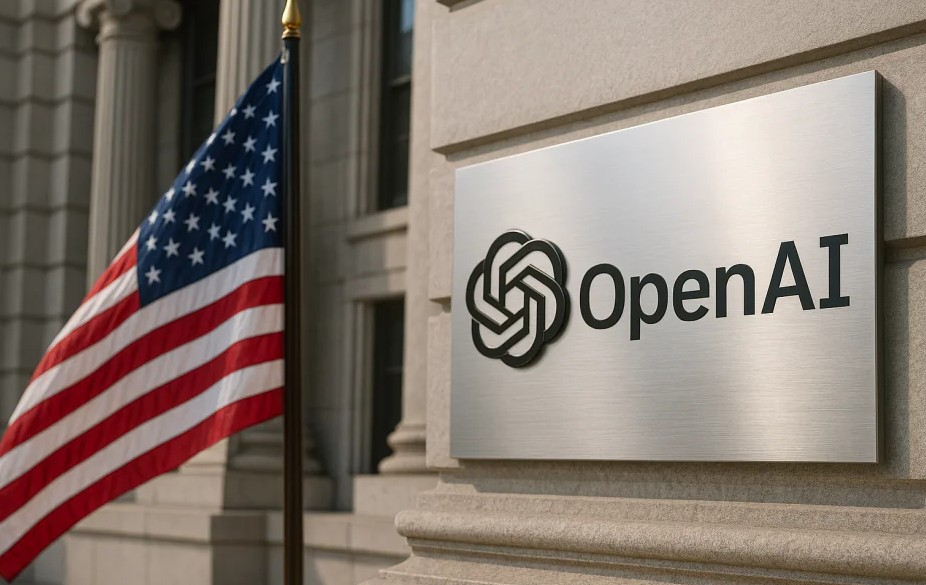
The Trump administration has formally backed OpenAI in its high-stakes copyright dispute with The New York Times and other publishers, arguing that artificial-intelligence companies should generally be allowed to use copyrighted material to train large language models under the legal doctrine of fair use. The government’s intervention could have major consequences for how AI companies develop their technology and how writers, newspapers and other creators are compensated for their work.
The Justice Department submitted its position in federal court as part of the long-running lawsuit brought by The New York Times against OpenAI and Microsoft. The Times sued the companies in December 2023, alleging that millions of its copyrighted articles had been used without authorization to train AI systems behind products such as ChatGPT and Microsoft Copilot.
The central legal question is whether copying copyrighted material during AI training constitutes infringement or qualifies as fair use, which permits certain uses of protected works without obtaining permission from copyright owners.
The Justice Department has now largely embraced the argument favored by OpenAI.
Government lawyers contend that training large language models is highly “transformative” because AI systems analyze enormous collections of material to learn relationships between language, facts and concepts rather than simply functioning as databases designed to reproduce the original articles. The administration argues that restricting this process could interfere with technological and scientific progress.
National security has also become an important part of the government’s position.
Justice Department officials argue that advanced AI systems can help national-security agencies analyze enormous amounts of information and draw useful conclusions from publicly available facts. Restricting access to training material, the administration warns, could weaken American AI development at a time when the United States is competing intensely with China and other countries for technological leadership.
The government also argues that requiring AI developers to negotiate licenses for enormous quantities of material could disproportionately benefit the largest technology and media companies. Smaller AI startups might be unable to afford the licensing costs necessary to build competitive models, potentially concentrating the industry among a handful of enormously wealthy companies.
Publishers strongly reject that reasoning.
The New York Times argues that OpenAI and other AI companies built valuable commercial products using journalism created through substantial investments of money, time and professional labor. The newspaper maintains that allowing companies to use those articles without compensation threatens the economic foundation supporting original journalism.
The Times criticized the administration’s intervention, saying it was siding with some of the world’s wealthiest AI companies at the expense of American creators.
The dispute has expanded well beyond The New York Times. Other publishers, including the New York Daily News, Chicago Tribune, Ziff Davis and the nonprofit Center for Investigative Reporting, have pursued claims involving AI training. Authors have also sued AI companies over the alleged unauthorized use of books.
At the same time, another model for resolving the conflict has emerged: licensing agreements.
Some publishers have negotiated commercial arrangements allowing AI companies to access their journalism legally. OpenAI itself has reached content agreements with numerous media organizations, demonstrating that publishers’ material can carry substantial commercial value for AI developers.
The case could therefore help determine whether such licensing becomes a legal necessity or primarily a voluntary business decision.
The consequences extend across the entire generative-AI industry. Modern AI systems require extraordinary amounts of text, images, video and other information during training. If courts determine that companies must obtain licenses for much of that material, developing advanced models could become considerably more expensive and legally complicated.
If courts broadly accept the fair-use argument, however, AI developers could retain substantial freedom to train systems using publicly available copyrighted works without paying every copyright holder.
The Trump administration’s intervention does not decide the case. The federal court will ultimately determine how copyright law applies, and further appeals could eventually place some of these questions before higher courts. But the government’s position gives OpenAI important support in one of the most consequential legal battles facing the AI industry.
At its core, the dispute presents a question that could shape the economics of artificial intelligence for decades: Should AI companies be free to learn from copyrighted material much as humans learn from what they read, or should they have to compensate the people and organizations whose work makes that training possible?
The answer could redefine the relationship between Silicon Valley and the creative industries—and determine who receives the economic benefits from the enormous amount of human knowledge being used to build the next generation of artificial intelligence.