U.S. Factory Hiring Shows Signs of Revival, but Tariffs Tell Only Part of the Story
· 3 min read
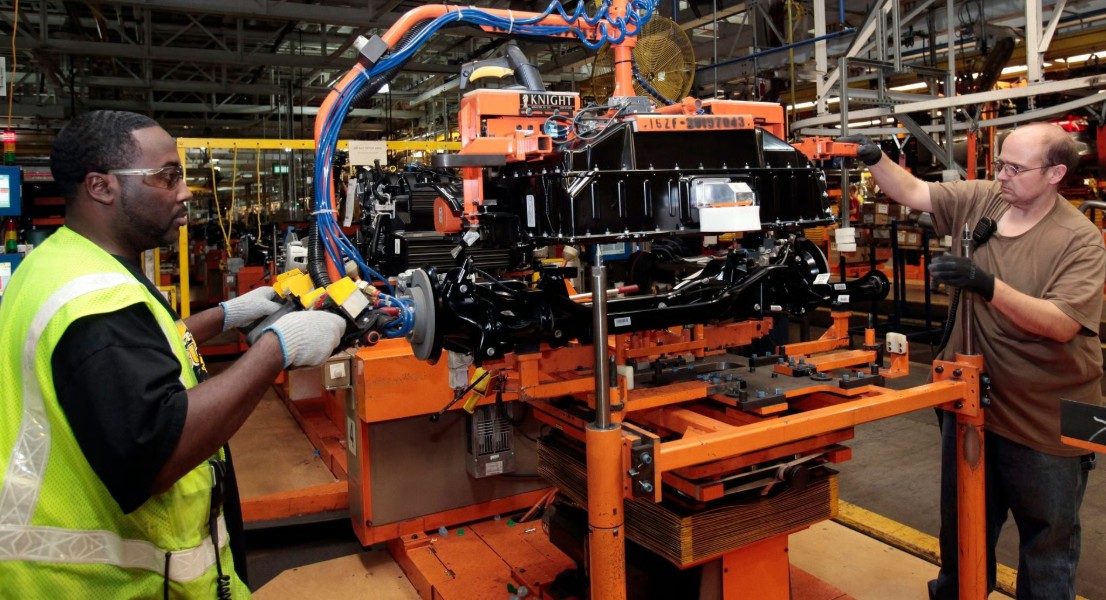
American manufacturing employment is beginning to show signs of recovery after a prolonged period of weakness, giving President Donald Trump some evidence that his effort to revive domestic industry may be gaining traction. However, economists and manufacturers caution that the improvement remains modest and that tariffs are helping certain industries while simultaneously creating serious difficulties for others.
Manufacturing employment began growing again in January 2026, although the pace has remained relatively slow. The turnaround follows years of concern about factory jobs moving overseas and comes as the Trump administration continues using tariffs to encourage companies to produce more goods inside the United States.
Trump made rebuilding American manufacturing a central economic promise. In April 2025, his administration imposed sweeping tariffs on imports from numerous countries, arguing that higher barriers to foreign goods would make U.S.-produced alternatives more competitive. The Supreme Court later struck down those “Liberation Day” tariffs, concluding that Trump had improperly relied on emergency powers. The administration subsequently turned to other legal authorities to impose new import duties.
Some of the clearest beneficiaries appear to be metal producers and fabricators. Steel, aluminum, copper and certain products manufactured from those metals have faced tariffs reaching as high as 50%, increasing the relative attractiveness of American suppliers.
Revere Copper, one of America’s historic copper manufacturers, says the combination of tariffs and enormous demand generated by data-center construction has helped reverse years of industrial decline. The company has added approximately 100 employees across facilities in New York and North Carolina since 2023 and has begun investing more heavily in factories and workers.
Penn United Technologies, a Pennsylvania precision-manufacturing company serving industries including automobiles and nuclear energy, has experienced a similar improvement. The company has hired about 50 workers and created additional openings as customers increasingly purchase components domestically rather than sourcing them from overseas.
Transportation manufacturing—including automobiles, trucks, buses, aircraft and vehicle components—has also added jobs. Economists said that Trump’s automotive tariffs could be contributing to those gains because more expensive imports can encourage companies and customers to substitute foreign production with American alternatives.
But tariffs are only one part of the explanation.
Electrical-equipment manufacturing has also expanded, including companies producing batteries, generators and wiring. Economists attribute much of that growth to the enormous artificial-intelligence and data-center investment boom, rather than primarily to trade policy.
Other manufacturers are experiencing the opposite effect from tariffs. Companies that depend on imported raw materials now face substantially higher production costs. Independent Can, a Maryland-area manufacturer of metal containers, has increased prices by approximately 12% to 15% because imported steel has become more expensive. Its chief executive says the company is attempting to avoid layoffs.
Husco, a Wisconsin manufacturer of automotive and construction-equipment components, has encountered similar problems. Tariffs have increased the cost of imported parts, but instead of moving all its purchasing to American suppliers, the company has sourced more components from Southeast Asia and Eastern Europe, where tariffs can be lower.
This illustrates the fundamental complexity of Trump’s manufacturing strategy. Tariffs can protect companies competing directly against foreign producers, potentially increasing domestic sales, investment and employment. But manufacturers that rely on imported steel, components or machinery effectively face higher input costs, which can reduce competitiveness and potentially raise prices for consumers.
The broader American labor market also remains fragile. U.S. employers unexpectedly eliminated 23,000 jobs in July, while previous estimates for May and June were revised downward by a combined 103,000 positions.
The emerging manufacturing recovery therefore cannot yet be described as a broad industrial renaissance. Some sectors—particularly metals and transportation—are showing encouraging signs, while AI infrastructure investment is independently creating additional factory demand. At the same time, other manufacturers are struggling with the costs created by the same tariffs intended to protect American industry.
The central question is whether these early job gains can develop into sustained manufacturing growth. For now, the evidence suggests that tariffs may be helping bring some factory jobs back—but their impact on American manufacturing is far more complicated than a simple success-or-failure story.