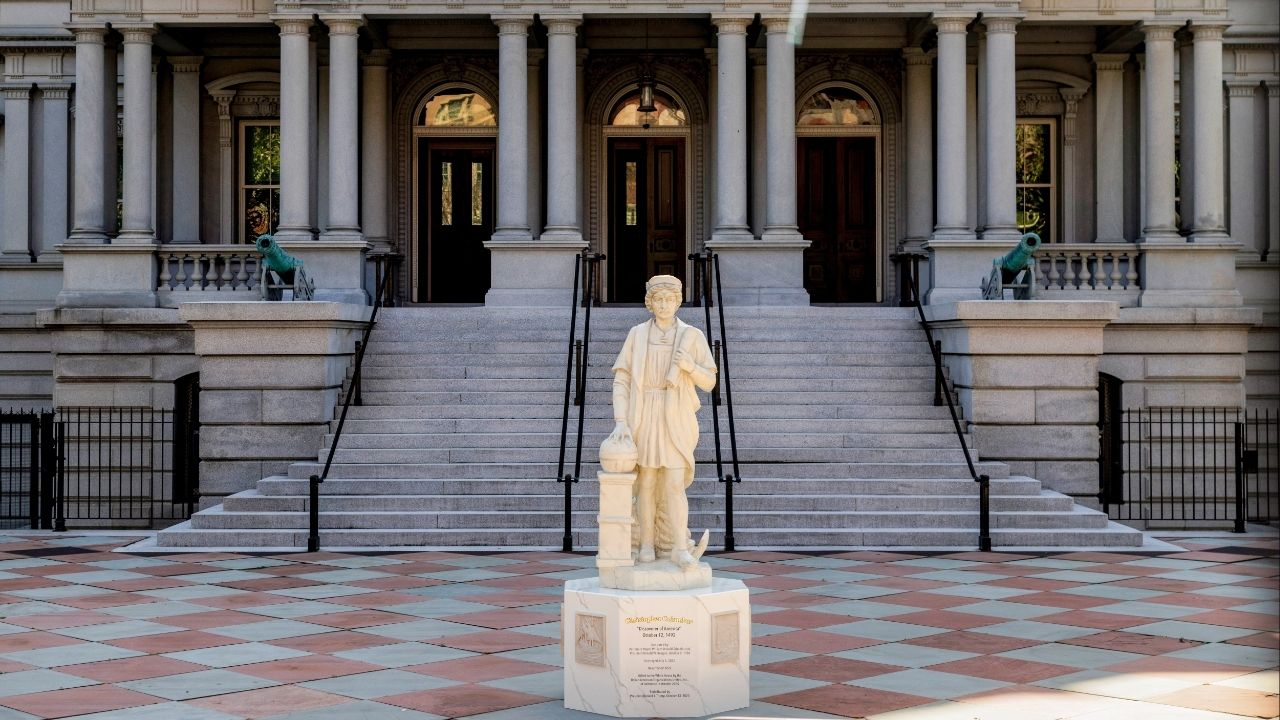
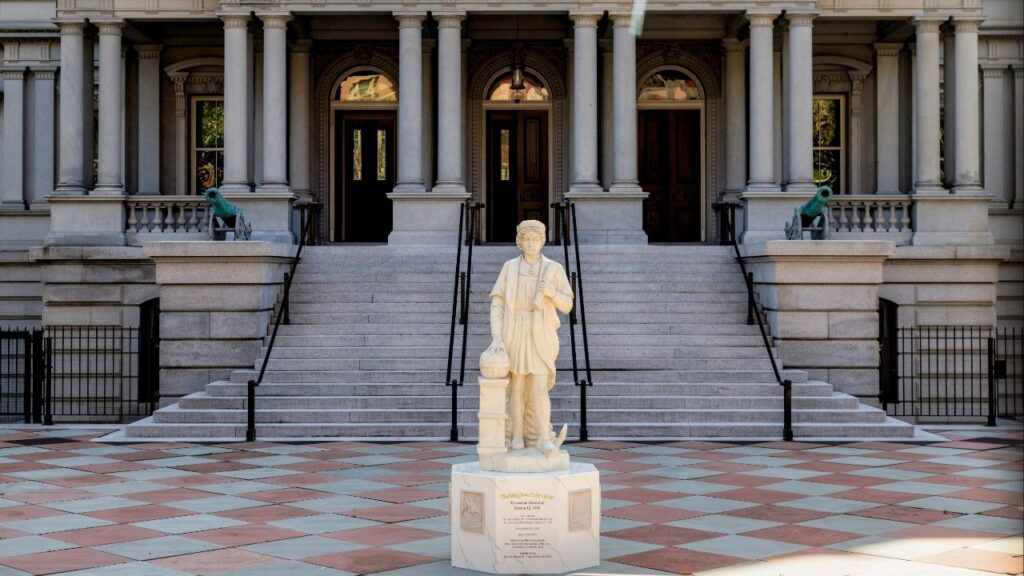
The White House has installed a statue of Christopher Columbus on its grounds, a move that reflects President Donald Trump’s broader campaign to reshape how U.S. history is presented in public spaces. The statue is positioned on the north side of the Eisenhower Executive Office Building, placing it within the highly symbolic landscape surrounding the White House complex and immediately pulling the administration back into a national debate over monuments, race, and historical memory.
The statue was gifted by the Conference of Presidents of Major Italian American Organizations, a group that has argued Columbus monuments represent Italian American heritage and identity. The sculpture is also explicitly tied to the wave of monument removals during the 2020 Black Lives Matter protests: it is a reconstruction of a Columbus statue originally unveiled in Baltimore in 1984 by President Ronald Reagan, which was later thrown into the harbor by protesters during the 2020 unrest. By placing a rebuilt version at the White House, the administration and donors are, in effect, reversing the symbolic outcome of that protest moment.
The installation fits with a pattern where Trump has pursued high-profile actions meant to restore or elevate figures and symbols that were targeted or reconsidered during the 2020 reckoning. The administration has reversed some earlier moves and has taken steps to reintroduce certain statues and memorials—choices that civil rights advocates criticize as undermining years of progress toward a fuller public accounting of slavery, colonialism, and racial violence. Supporters of Trump’s approach frame these acts as protecting heritage and pushing back against what they call ideological “erasure” of American history.
Columbus remains one of the most polarizing figures in the U.S. monument debate. Critics argue that honoring Columbus ignores the violence tied to European colonization and the exploitation of Indigenous peoples; defenders, including many Italian American groups, see him as a historic symbol of immigrant pride and acceptance. The statue’s return to a prominent federal setting is likely to intensify that conflict rather than settle it, because it elevates Columbus at a time when many communities have moved toward replacing Columbus Day with Indigenous Peoples Day or reframing public commemoration.
Trump amplified the message publicly. He praised Columbus as a heroic figure and criticized those who toppled statues as “anti-American rioters.” That language signals the administration’s intent to make the monument not merely a cultural gesture, but a political statement in an ongoing culture-war fight over what counts as patriotism, whose stories are centered, and what public institutions should celebrate.
In short, the Columbus statue’s installation is less about a single artwork than about power over national narrative: who gets honored on federal grounds, how the U.S. marks its past, and whether the post-2020 reassessment of public monuments continues—or is pushed into reverse by Washington.