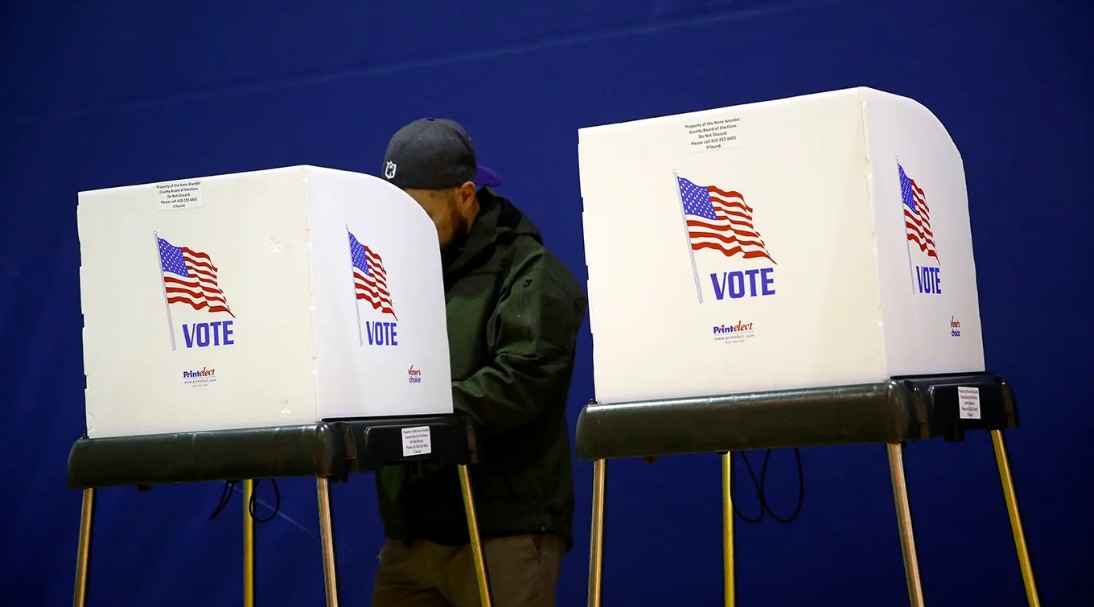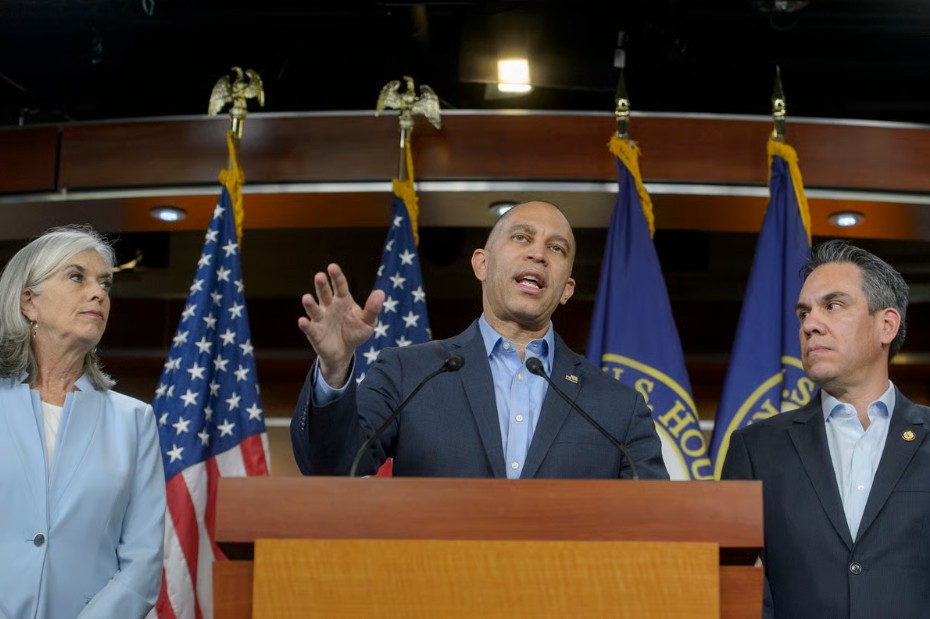
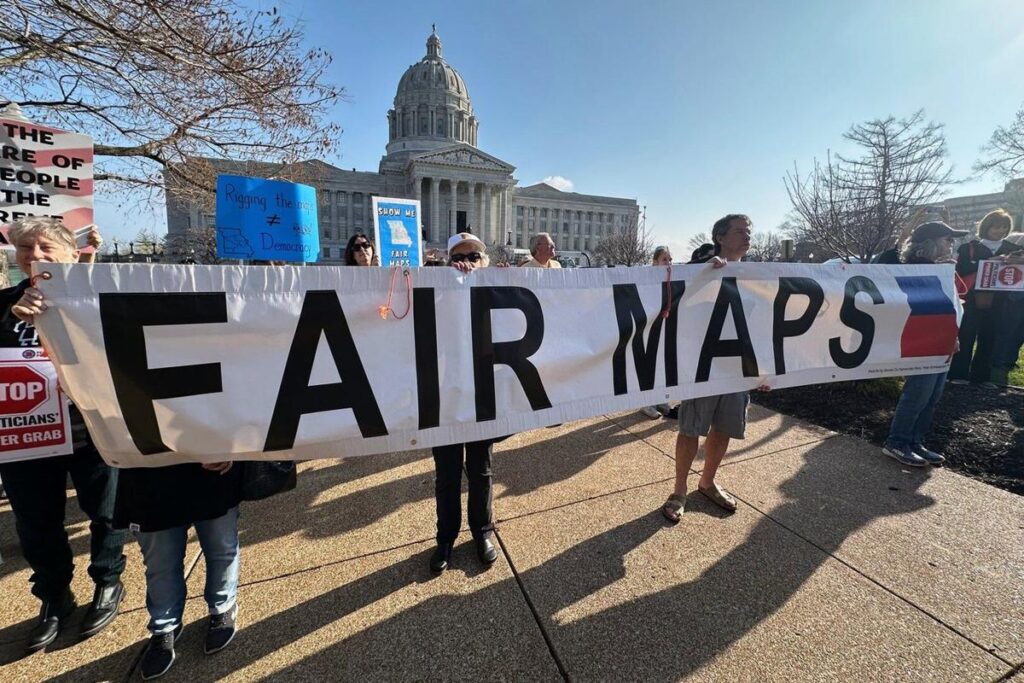
Missouri’s highest court has upheld a mid-decade congressional redistricting plan passed by the state’s Republican-led legislature at President Donald Trump’s urging, a ruling that keeps the new map in place as candidates prepare for the 2026 elections. The decision is politically significant because Trump and Missouri Republicans view the map as a way to protect the GOP’s narrow U.S. House majority by making one Democratic-held seat more competitive.
At issue was whether Missouri’s constitution permits lawmakers to redraw congressional lines only immediately after a new census, or whether they can do it more often. Opponents argued the constitution allows redistricting only following census certification, not in the middle of a decade. But the Missouri Supreme Court rejected that argument in a 4–3 decision, concluding there is no explicit constitutional prohibition against redistricting more frequently. The court’s reasoning focused on the meaning of the word “when” in the constitutional provision that says the General Assembly shall redraw districts “when” new census data is certified. Plaintiffs said “when” should be read as a limitation (only at that moment). The state attorney general’s office and Missouri Republican Party argued “when” sets a minimum requirement—meaning lawmakers must redraw after a census, but are not barred from redrawing at other times. The court sided with that view.
The stakes are clearest around Kansas City. Under the post-2022 census map, Missouri has six Republican and two Democratic U.S. House members. The new map is designed to help Republicans win the Kansas City–area district held by Democratic Rep. Emanuel Cleaver by shifting parts of the district into neighboring seats and stretching what remains into more Republican-leaning rural areas. With the candidate filing deadline approaching, Republicans have already begun lining up to challenge Cleaver under the new boundaries.
Even with the court’s ruling, the fight is not fully over. Another legal challenge has already been raised arguing the new districts violate state requirements to be compact, and that case is still moving through the courts. In addition, opponents are pursuing a political strategy: they have gathered referendum signatures in an attempt to put the map before voters, and a separate lawsuit is asking a judge to rule that the petition effort should automatically suspend the map until a statewide vote can occur in November.
The decision also fits into a widening national struggle over mid-decade redistricting. Missouri’s fight is part of a broader pattern in which states revise lines outside the usual post-census cycle in ways that could shift House control—an especially high-stakes prospect when control of Congress is closely contested.
In short, Missouri’s ruling gives Republicans an immediate structural advantage heading into 2026 by preserving a map designed to put a key Democratic seat in play—while guaranteeing that the broader argument over gerrymandering, timing, and voter power will continue in both courts and politics.