A Sea Star “Baby Boom” Offers Hope After Disease Devastated Pacific Tide Pools
· 2 min read
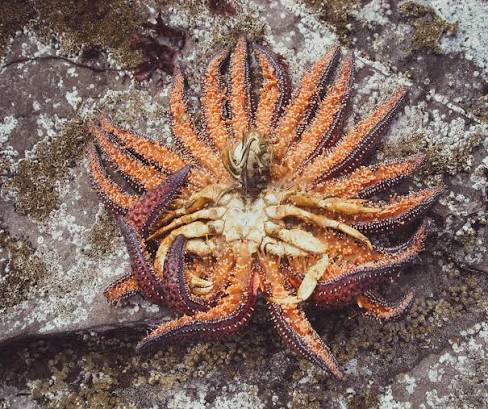
Sea stars along the West Coast are showing signs of a surprising recovery more than a decade after a devastating disease nearly wiped them out. Biologists studying tide pools in Oregon and other parts of the Pacific Coast are seeing a new wave of young sea stars, raising hopes that some populations may be rebounding after one of the largest marine wildlife die-offs ever recorded.
The crisis began in 2013, when sea star wasting disease spread from Alaska to Mexico and killed billions of sea stars. The disease was gruesome and fast-moving: infected animals developed lesions, lost limbs, became limp and often disintegrated. More than 20 species were affected, but the impact was especially severe for sunflower sea stars, whose populations dropped by more than 90% in many areas.
For years, scientists did not know exactly what was causing the epidemic. Researchers initially suspected a virus or environmental stress, but a 2025 study identified Vibrio pectenicida, a bacterium related to the pathogen behind cholera, as the likely culprit. That discovery mattered because understanding the cause of the disease could help scientists develop conservation strategies, including captive breeding, disease-resistance studies and possible probiotic treatments.
The new recovery is especially striking because sea stars play a major role in coastal ecosystems. Ochre sea stars, the purple and orange species often found clinging to rocks in tide pools, are considered keystone predators because they help control mussel populations. When sea stars disappeared, mussels and other prey could spread more aggressively, changing the balance of rocky shore habitats. In deeper waters, the loss of sunflower sea stars allowed sea urchin populations to expand, contributing to the destruction of kelp forests that provide habitat for fish, invertebrates and other marine life.
The comeback appears to be driven in part by a “baby boom.” Scientists have observed unusually large numbers of juvenile sea stars in some areas, a phenomenon that stunned researchers after such a severe collapse. These young animals suggest that surviving adults may have reproduced successfully after the worst phase of the disease passed. Earlier observations in Oregon also showed purple sea stars beginning to recover after the 2014 die-off, and recent monitoring suggests that some populations are again becoming visible in tide pools.
Still, the recovery is uneven and fragile. Some species, especially the sunflower sea star, remain in serious trouble. Scientists are also concerned that climate change, marine heat waves, pollution, microplastics and pesticides could make recovery harder or trigger new outbreaks. Last year, microplastics and the pesticide imidacloprid may be harming young sea stars in Washington state, adding another layer of stress to populations already weakened by disease.
Overall, the sea star resurgence is a rare hopeful sign in a damaged marine ecosystem. It does not mean the crisis is over, but it shows that nature can sometimes recover when enough survivors remain and conditions allow reproduction. For scientists, the challenge now is to protect that recovery, understand why some sea stars survived, and restore species that are still missing from the Pacific Coast’s underwater food web.