Alabama Secures $1.8 Billion Advanced Manufacturing Investment From Niron Magnetics, Creating 700 High-Paying Jobs and Strengthening U.S. Industrial Independence
· 2 min read
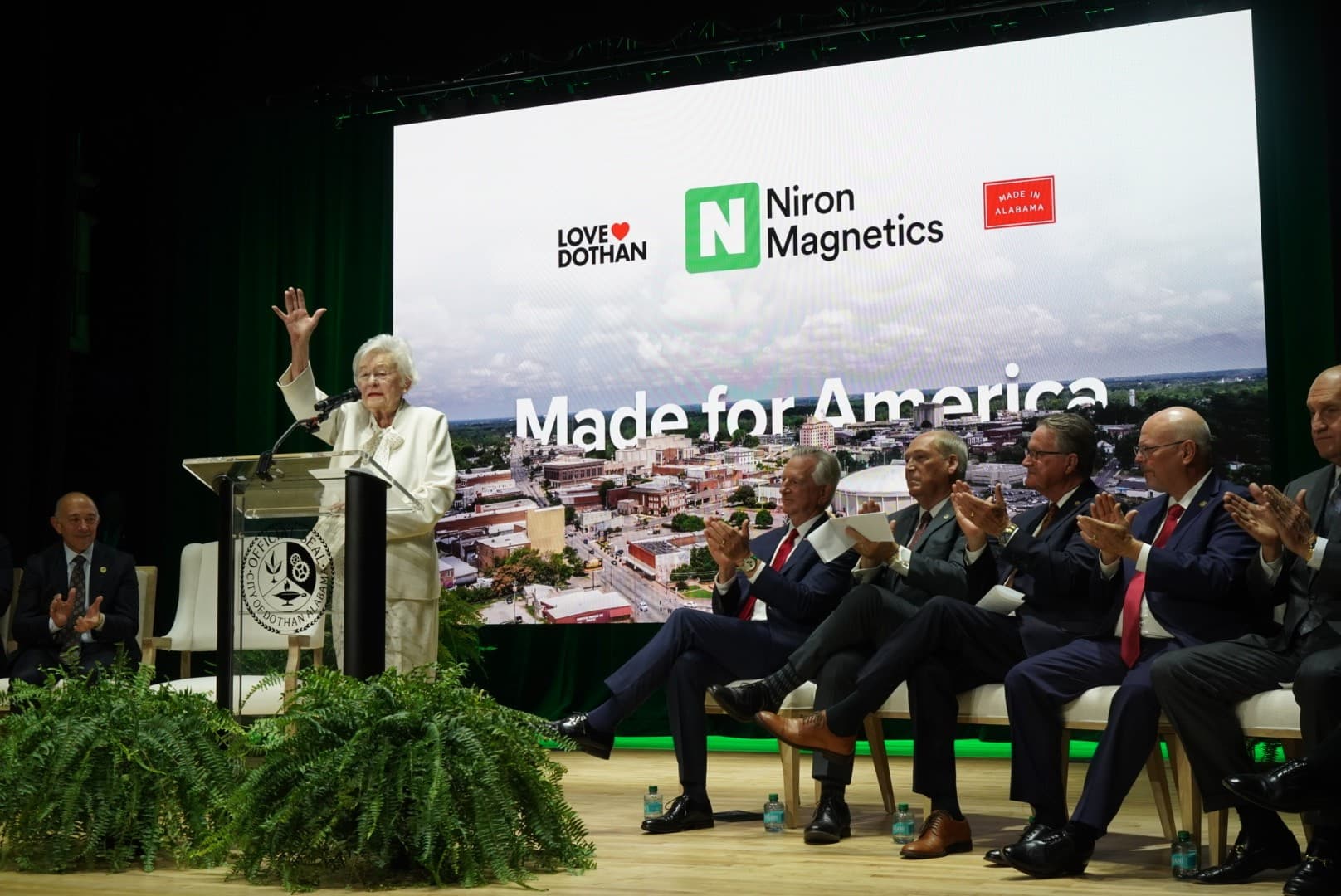
Alabama is preparing for a significant expansion of its advanced manufacturing industry after Governor Kay Ivey announced that Niron Magnetics will invest $1.8 billion in a new production campus in Dothan.
The Minnesota-based technology company specializes in permanent magnets that do not require rare-earth elements, offering an alternative to conventional magnet technologies used across several strategically important industries.
The investment is expected to generate approximately 700 high-paying jobs within five years, strengthening the regional economy while supporting America’s efforts to develop more independent industrial supply chains.
The manufacturing campus will occupy approximately 1.6 million square feet within Dothan’s 446-acre Westgate Super Site industrial park.
Niron Magnetics selected Alabama after evaluating potential locations across 22 states, demonstrating the state’s competitiveness in attracting sophisticated manufacturing operations.
Construction is expected to begin in 2028, with commercial production scheduled to start in 2029. The facility is designed to produce up to 10,000 tons of permanent magnets annually, substantially expanding the company’s manufacturing capabilities.
Founded in 2013, Niron Magnetics develops permanent magnets based on iron nitride technology. Unlike conventional neodymium-based magnets, the company’s products rely on more readily available materials that can be sourced domestically.
Permanent magnets are essential components in numerous modern technologies, including electric motors, industrial machinery, robotics, consumer electronics and artificial intelligence infrastructure.
Approximately 90% of global rare-earth magnet production is concentrated overseas, according to Alabama officials. This concentration creates potential vulnerabilities for American manufacturers, particularly during international trade disputes and supply disruptions.
Expanding domestic production through alternative materials could help businesses reduce these risks while diversifying their industrial supply chains. The projected creation of 700 jobs represents an important economic opportunity for southeastern Alabama.
The manufacturing operation could also generate additional demand for transportation, construction, technical services and local suppliers. Dothan Mayor Mark Saliba emphasized the project’s potential to provide residents with long-term career opportunities while strengthening the region’s economic importance.
U.S. Senator Katie Britt also welcomed the announcement, highlighting its significance for domestic manufacturing and economic growth. The project follows years of collaboration between Alabama’s government, Dothan authorities and Houston County economic development organizations.
State initiatives, including the Growing Alabama Tax Credit program and the Site Evaluation and Economic Development Strategy, helped prepare the industrial property for large-scale investment.
The location’s railway access and transportation connections further enhance its suitability for manufacturing and distribution. These infrastructure improvements illustrate how regional development strategies can attract substantial private-sector investment.
The Alabama campus will become Niron Magnetics’ second major production facility, following its planned factory in Sartell, Minnesota, which is expected to open in 2027.
The Minnesota operation will have an annual production capacity of approximately 1,500 tons. The larger Alabama facility represents the next phase of the company’s expansion. However, its anticipated economic benefits will depend on successful construction, technological scalability, customer demand and operational performance.
Niron Magnetics’ expansion reflects growing interest in developing domestic alternatives to imported industrial materials. By combining materials science, manufacturing innovation and regional economic development, the project could strengthen American competitiveness across automotive, technology and national security industries.
For Alabama, the $1.8 billion investment represents an opportunity to create skilled employment, diversify its economy and become an increasingly important center for America’s next generation of advanced manufacturing technologies.