Army Secretary Dan Driscoll Resigns as Pentagon Leadership Turmoil Deepens
· 3 min read
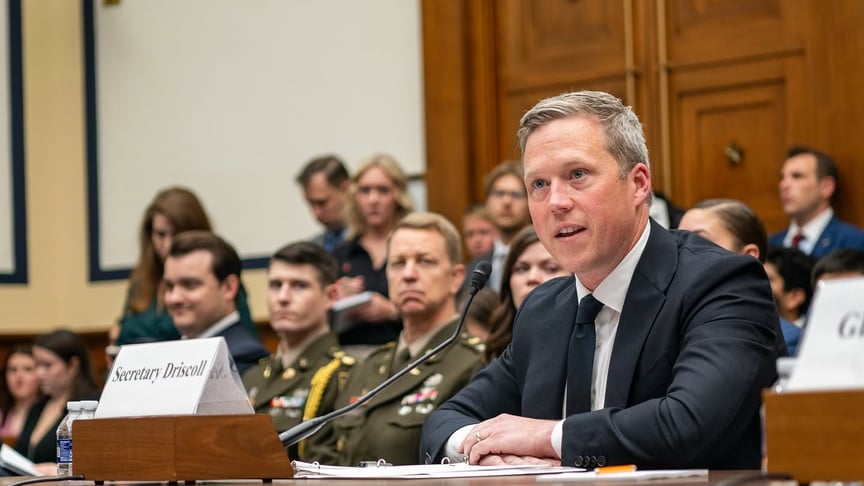
Army Secretary Dan Driscoll is resigning after just 18 months as the Army’s top civilian leader, following months of reported disagreements with Defense Secretary Pete Hegseth over senior military leadership and the future direction of the service. His departure adds another major vacancy to a Pentagon already experiencing significant turnover at the highest levels.
Driscoll, an Iraq War veteran and former venture-capital investor, became the youngest Army secretary in history when he took office in 2025 at age 38. A close friend of Vice President JD Vance, whom he met at Yale Law School, Driscoll entered the Pentagon with a mandate to modernize the Army, accelerate weapons development and incorporate lessons from rapidly evolving conflicts, particularly the extensive use of inexpensive drones in Ukraine.
Those modernization efforts became one of Driscoll’s defining priorities. He pushed the Army to develop drones and counter-drone technologies faster, reduce acquisition bureaucracy and adopt more commercial approaches to military procurement.
But his relationship with Hegseth became increasingly strained.
One major source of disagreement involved Hegseth’s removal of senior Army officers. When the defense secretary abruptly dismissed Army Chief of Staff Gen. Randy George in April, Driscoll publicly expressed deep respect for George, describing him as a transformational leader. Driscoll told Congress that after learning about the dismissal while vacationing with his family, they drove to George’s home to personally support him.
The leadership changes have been dramatic. When Hegseth entered office, the Army had 10 active-duty four-star generals. According to data, that number has fallen to five. Hegseth also blocked promotions involving Black and female Army officers whom Driscoll supported, another reported source of friction between the two officials.
Driscoll’s modernization agenda also encountered resistance. An Army drone unit in Europe had been studying lessons from Ukraine and experimenting with new approaches to unmanned warfare, but the Pentagon recently moved to dismantle the initiative. The decision represented a setback for an area Driscoll had championed throughout his tenure.
Before resigning, Driscoll reportedly spoke directly with President Donald Trump about his concerns regarding Army readiness, modernization and the consequences of removing experienced senior officers. Driscoll believed the personnel changes were interfering with efforts to transform the Army.
The White House nevertheless praised Driscoll after his resignation, describing him as highly effective in advancing Trump’s military agenda. Officials highlighted his work on readiness, military operations and his unusual diplomatic role in negotiations involving Russia and Ukraine.
Driscoll’s departure is particularly significant because the Army will now lack both a Senate-confirmed civilian leader and a Senate-confirmed uniformed chief of staff. Gen. Christopher LaNeve has been serving as acting Army chief since George’s dismissal.
That leadership vacuum comes during an especially demanding period for the U.S. military, with American forces deployed extensively overseas and the Pentagon simultaneously attempting to modernize its capabilities for future conflicts.
Driscoll’s resignation also fits into a broader pattern of leadership turnover under Hegseth. Several senior generals and admirals have been removed or departed, generating debate in Congress about whether the changes represent necessary institutional reform or are creating instability inside the Defense Department.
Democratic lawmakers have been particularly critical. Sen. Jack Reed of Rhode Island, the ranking Democrat on the Senate Armed Services Committee, said Driscoll’s resignation leaves the Army without its top civilian and uniformed leaders and argued that the service’s senior ranks have been significantly weakened. Republicans including Rep. Steve Womack, meanwhile, praised Driscoll as a transformative leader.
Driscoll’s future is unclear. His close relationship with Vance has fueled speculation that he could eventually return to politics or participate in a future Vance campaign. Before becoming Army secretary, he served as a political adviser to Vance during the 2024 presidential campaign.
His departure ultimately represents more than another personnel change. It highlights a growing struggle inside the Pentagon over military modernization, senior leadership and the direction of America’s largest military service. As the Army confronts rapidly changing warfare and major international commitments, Driscoll’s resignation leaves important questions about who will lead that transformation—and whether continued turnover at the Pentagon could complicate it further.