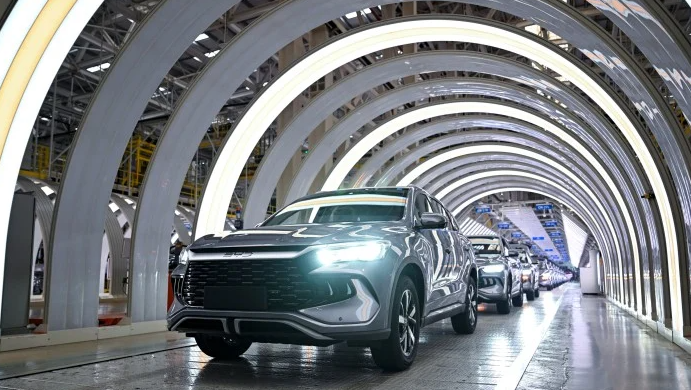
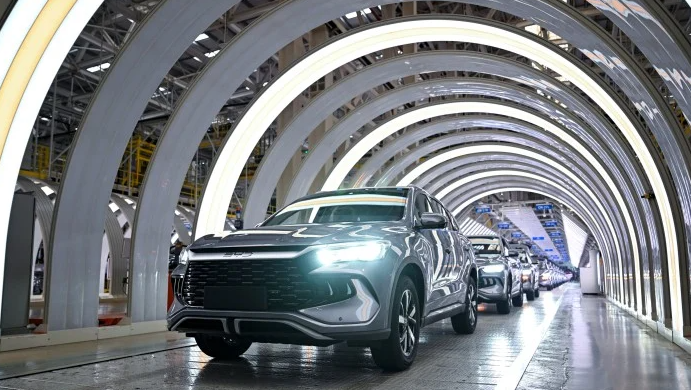
A Republican senator is preparing legislation that would significantly expand the U.S. ban on Chinese automobiles, taking a much harder line than current rules by targeting not just imported vehicles, but also the software, hardware, and business partnerships tied to Chinese carmakers. Senator Bernie Moreno plans to introduce the bill next month, arguing that Washington should make sure there is “never a scenario where a Chinese automobile will enter” the American market. His proposal shows how concerns about Chinese technology are spreading deeper into the auto sector, where modern vehicles are increasingly treated not only as transportation products but also as rolling data-collection systems.
The existing U.S. restrictions already go far. Biden administration imposed a sweeping regulation in January 2025 that effectively bans all Chinese automakers from selling passenger vehicles in the United States. That move was justified on national security grounds, with officials warning that connected vehicles can gather sensitive data about American drivers and locations. Moreno’s bill would go beyond that earlier action by trying to close any remaining path for Chinese auto companies to gain a foothold in the U.S. market, whether directly or indirectly.
Moreno said his goal is to block Chinese automobiles in every form: “that’s hardware, that’s software, that’s partnerships.” He made the case at an automotive forum ahead of the New York Auto Show and urged allied regions, including Latin America, Mexico, Canada, and Europe, to adopt similar standards. His comments suggest that the proposal is about more than U.S. trade policy alone. It is also part of a wider push to build a coordinated Western barrier against Chinese auto technology, much like past U.S. efforts involving telecom infrastructure and semiconductor restrictions. That broader comparison is an inference based on Moreno’s explicit analogy to Huawei and his appeal for allied governments to follow Washington’s lead.
The proposal has strong support from U.S. automakers and trade groups. Earlier in March, major industry groups urged the U.S. government to keep Chinese automakers out of the country in advance of President Donald Trump’s planned summit with Chinese President Xi Jinping in May. That backing is important because it shows the effort is not just a political statement from one senator. It also aligns with the interests of domestic manufacturers that want to prevent Chinese competitors from entering a market where price competition, technology integration, and EV development are already putting pressure on established players.
China has sharply criticized the proposal. Apparently, the Chinese Embassy in Washington argued that the United States has engaged in trade protectionism and discriminatory subsidy policies that block Chinese-made cars from entering the U.S. market. The embassy said Moreno’s legislation violates market-economy principles and fair competition, calling it a clear example of protectionism and economic coercion. That response highlights the larger geopolitical context: auto policy is becoming another front in the broader U.S.-China economic rivalry, where each side increasingly frames the other’s actions as either national self-protection or unfair commercial exclusion.
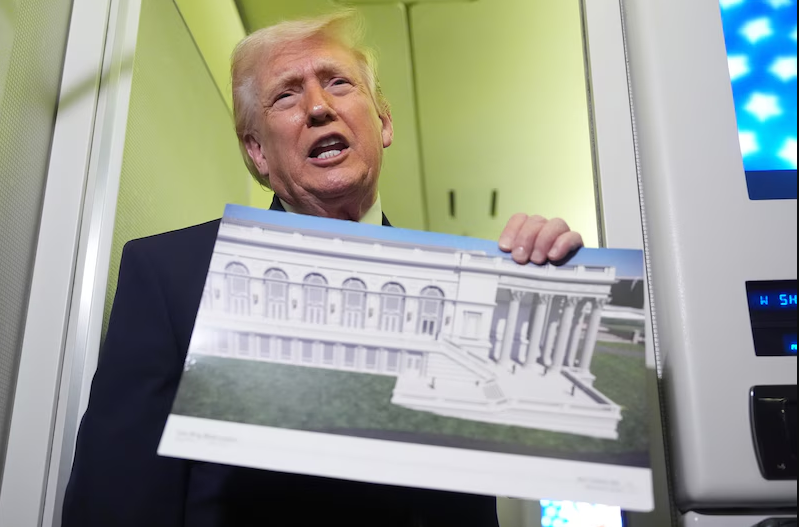
The proposal also creates a political contrast with Trump’s own earlier remarks. In January, Trump said he was open to Chinese automakers building cars in the United States if they invested locally and hired American workers. Now, ahead of his expected May trip to China, a Republican senator is pushing a much more absolute position. Altogether, the episode shows how quickly policy around Chinese technology can move from selective restriction to calls for total exclusion, especially in industries where data security and industrial competition increasingly overlap.