Pelosi’s Next Chapter: New UC Berkeley Institute Will Tackle Democracy, Rights and Political Reform
· 3 min read
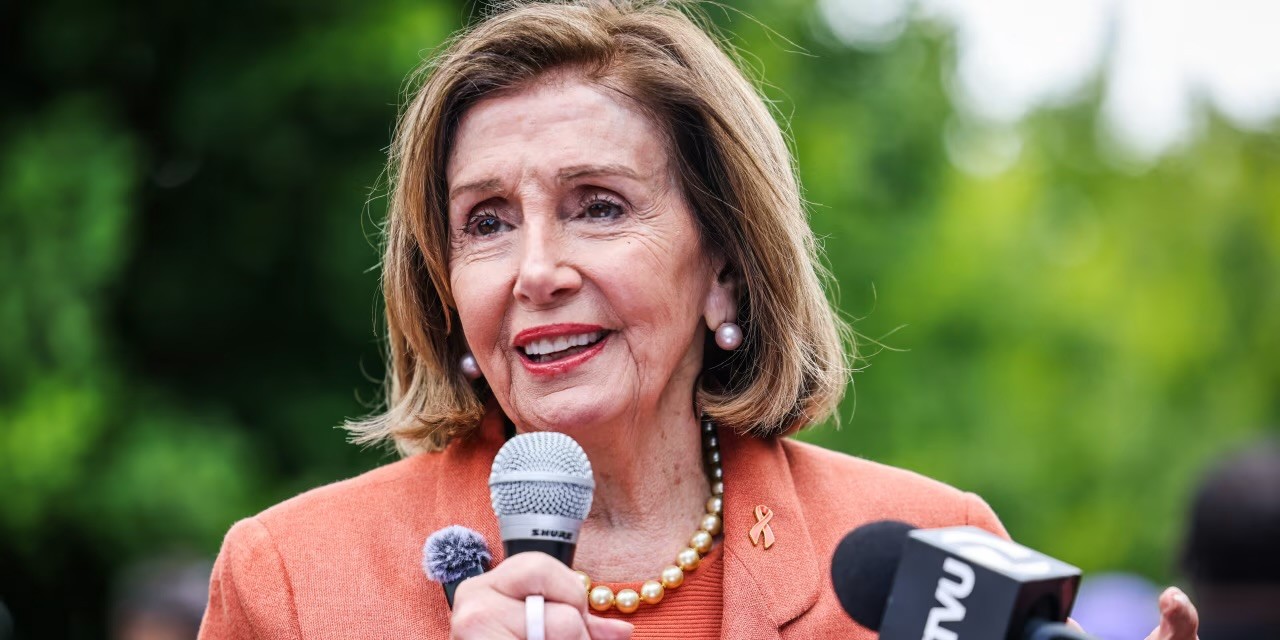
Former House Speaker Nancy Pelosi is partnering with the University of California, Berkeley to create a new academic institute focused on strengthening democracy, giving her a prominent public role after she leaves Congress. The Nancy Pelosi Institute for Representative Democracy is set to launch in January and will be anchored in UC Berkeley’s political science department. Pelosi, who is not seeking reelection after nearly 40 years representing San Francisco, will also participate directly in the institute’s academic life by co-teaching a course on Congress.
The institute is being presented as a nonpartisan effort, even though Pelosi herself remains one of the most recognizable Democratic figures in modern American politics. UC Berkeley says the project will focus on four broad pillars: strengthening America’s democratic institutions, confronting major challenges affecting society and the economy, advancing human and civil rights, and promoting political leadership that reflects a wider range of backgrounds and perspectives. Examples of future research include ways to address climate change, wealth inequality, and possible electoral reforms that could reduce political polarization.
Pelosi framed the institute as a way to prepare younger generations for public service and democratic leadership. She said she was honored to work with scholars and students so they can build the tools needed to strengthen democratic institutions and serve the public good. UC Berkeley Chancellor Rich Lyons said the university does not want the institute to merely study democracy from a distance, but to actively help reinforce it. That language suggests the school wants the institute to be both intellectual and practical, connecting academic research with real-world democratic problems.
The project already has substantial financial backing. The institute has secured more than $35 million in philanthropic commitments, giving it a significant base before it formally opens. That early funding matters because it signals that donors and university leaders see the institute as more than a symbolic tribute to Pelosi’s career. It is being built as a lasting institution with resources to support teaching, research, events, and public engagement.
The institute will also include an exhibit dedicated to Pelosi’s political career, which has been historically significant on several fronts. Pelosi became the first woman to serve as House speaker, held the position during the final years of George W. Bush’s presidency and the first two years of Barack Obama’s presidency, and played a central role in passing major legislation such as the Affordable Care Act. The institute partly is a continuation of that legacy, turning Pelosi’s experience in Congress into a teaching and public-service project.
The announcement also comes at a moment of transition. Pelosi’s decision not to seek reelection marked the end of one of the most influential congressional careers in modern U.S. history. Her departure was a generational shift inside the Democratic Party, given her decades of power in fundraising, coalition-building, and legislative strategy. The new Berkeley institute allows her to remain active in public life without holding elected office, and it suggests she intends to shape political debate and civic education even in retirement.
The new institute is both a personal next step for Pelosi and a broader statement about the political moment. Its mission reflects growing concern about democratic instability, polarization, rights, and public trust in institutions. By placing Pelosi at the center of a university-based democracy project, Berkeley is turning one of the country’s most experienced political figures into a scholar-practitioner for the next phase of her public life.