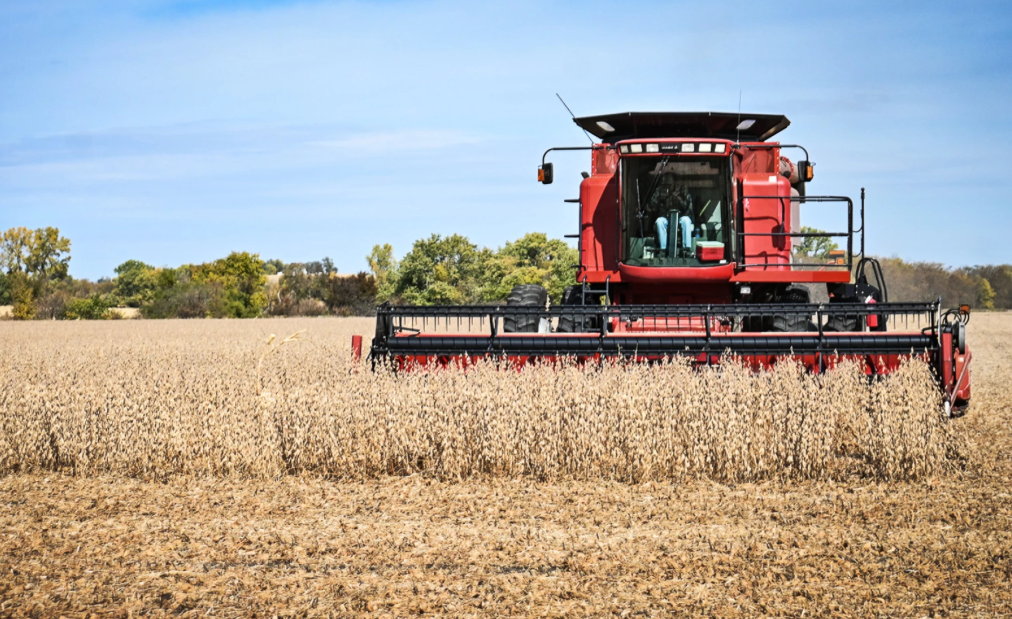
The U.S. government says it is expanding research funding aimed at reshaping how American farms protect crops and manage pests, pushing total federal investment in “new and sustainable” farm practices to more than $1 billion. The administration is adding $200 million in new support as part of a broader push to reduce reliance on pesticides by developing safer alternatives and improving understanding of how chemical exposures affect human health.
The announcement was issued jointly by the Department of Health and Human Services (HHS), the Environmental Protection Agency (EPA), and the Department of Agriculture (USDA)—a sign that the effort is meant to connect agriculture, public health, and environmental regulation rather than treat them as separate silos. The $200 million increment is split into two large buckets managed by HHS: $100 million will fund research into the “exposure, diagnosis and treatment” of cumulative chemical exposures and their effects on individual health, while another $100 million will back work to identify new methods of crop protection that reduce dependence on chemical tools.
The funding arrives amid a politically charged debate inside Trump-aligned circles about the future of widely used farm chemicals—especially glyphosate, the active ingredient in many weedkillers and the subject of extensive litigation from plaintiffs who allege it causes cancer.
President Donald Trump had recently moved to shore up domestic supplies of phosphorus and glyphosate, framing it as a supply-security measure. But that step sparked criticism from health activists in the pro-Trump “Make America Healthy Again” movement, which has pushed against broad glyphosate use on health grounds.
In that context, the new research investment functions as both a policy signal and a practical tool. On one level, it acknowledges that modern agriculture depends heavily on chemical inputs and that a rapid, uncompensated shift could disrupt farm economics and food production. On another level, it responds to public pressure—across ideological lines—for clearer science on long-term exposure and for scalable alternatives that can maintain yields while reducing perceived health and environmental risks.
The initiative is an effort to accelerate innovation: better data on exposure and health outcomes can guide future safety standards, while research into non-chemical or reduced-chemical crop protection can expand the menu of options available to farmers (for example, new biological controls, improved integrated pest management, and next-generation practices that suppress weeds and pests with fewer synthetic inputs). The agencies’ joint statement format suggests the administration wants the program to influence both research priorities and the policy conversation about what “safer agriculture” should look like in the coming decade.
Overall, the move highlights a central tension in U.S. farm policy right now: keeping production stable and costs manageable while responding to rising concern about chemical exposure and litigation risk. By pushing research funding above $1 billion, the government is betting that science—rather than outright bans or pure status quo—can chart a path that improves health outcomes and environmental performance without undermining farm productivity.