University of Delaware Breakthrough Cuts Carbon Capture Energy Use by 50%, Bringing Affordable Climate Technology Closer to Reality
· 3 min read
Engineers at the University of Delaware have developed a promising carbon capture technology that uses approximately 50% less energy than conventional systems, potentially overcoming one of the biggest financial obstacles to removing greenhouse gases directly from the atmosphere.
The breakthrough, led by chemical engineering professor Yushan Yan and developed with commercial partner RepAir Carbon, uses technology inspired by rechargeable batteries to capture carbon dioxide at room temperature without relying on the energy-intensive heating processes used by many existing systems.
The findings, published in the scientific journal Nature Energy, could help make direct air capture a more practical tool for addressing climate change.
Direct air capture involves extracting carbon dioxide from ordinary air, where the gas exists at relatively low concentrations. Although the technology offers an opportunity to remove emissions already circulating in the atmosphere, conventional systems require substantial energy to separate and collect carbon dioxide.
Many existing methods rely on heat to release captured gas from chemical materials, increasing operational costs and limiting commercial deployment. The University of Delaware researchers approached the challenge differently.
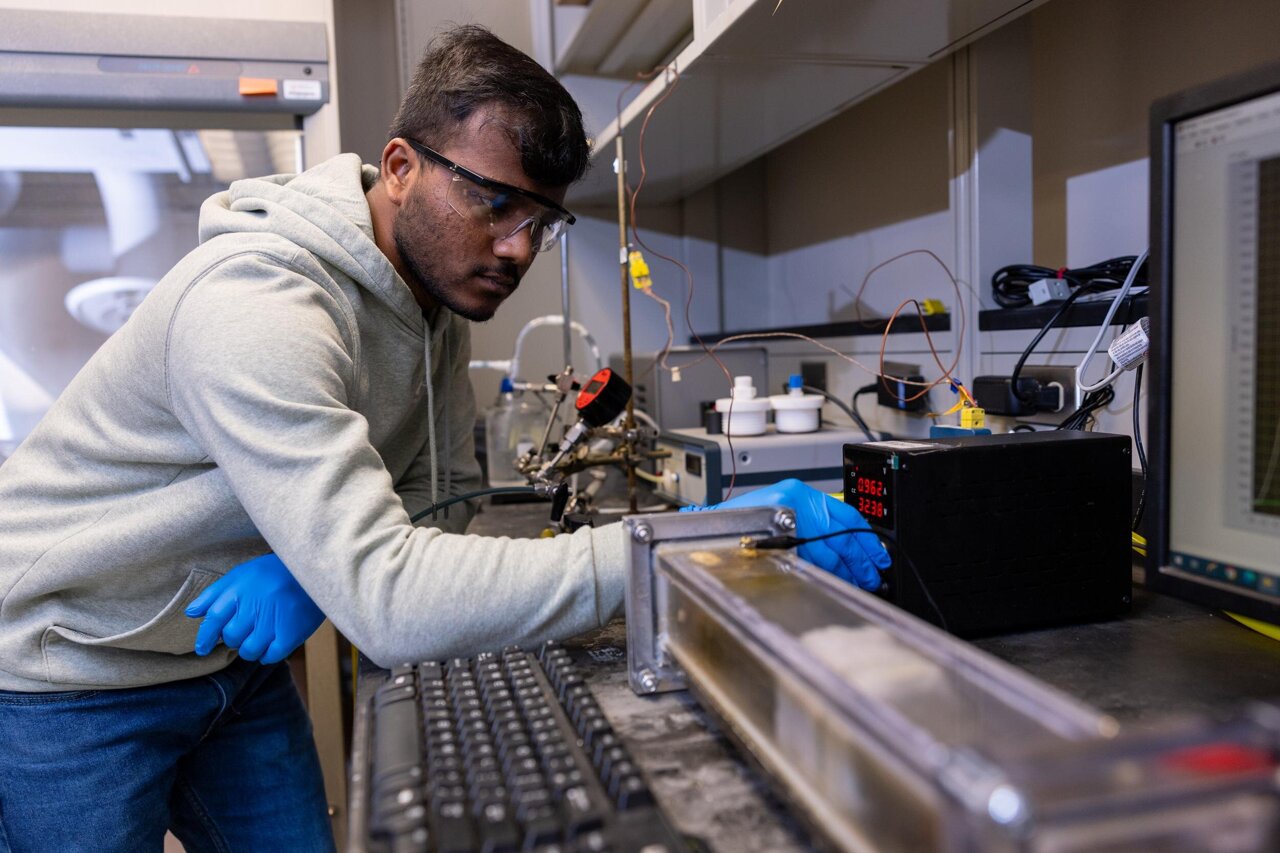
Their system uses electricity and nickel hydroxide electrodes, components based on chemistry already found in rechargeable batteries. As air passes through the device, one electrode captures carbon dioxide while another part of the system releases it in a concentrated stream.
When an electrode needs recharging, another can continue operating, allowing the process to be repeated. The researchers demonstrated that their electrochemical system can operate using less than one megawatt-hour of energy per metric ton of carbon dioxide captured under certain tested conditions.
In a larger nine-cell demonstration, the system averaged approximately 0.83 megawatt-hours per ton. That represents a substantial improvement over conventional direct air capture technologies, which often require significantly more energy.
Because energy represents a major operating expense, reducing consumption could improve the economic feasibility of carbon removal. Scientists and industry leaders have long discussed a target of approximately $100 per ton of captured carbon dioxide as an important milestone for affordable deployment.
The Delaware researchers believe their technology could help bring that target within reach, although commercial operating costs have not yet been established. The project has already progressed beyond initial laboratory experiments.
Working with RepAir Carbon, researchers tested the technology through different configurations, including a manufacturable cell operated for more than 5,000 hours.
The company also demonstrated a larger multi-cell system, providing evidence that the approach can function beyond small laboratory devices. These results suggest that the technology has potential for industrial development.
However, further testing will be needed to establish long-term reliability, maintenance requirements and operating costs at commercial scale. Captured carbon dioxide could be permanently stored underground or used as a raw material in certain industrial applications.
Potential uses include beverage production, agricultural products and synthetic fuels. Researchers also believe direct air capture could help address emissions from industries such as agriculture and construction, where eliminating every source of carbon pollution can be difficult.
Importantly, capturing carbon dioxide does not automatically guarantee permanent climate benefits. Those depend on how the gas is stored or reused and on the emissions generated by the capture process itself. One advantage of the new technology is its reliance on established battery chemistry.
Using familiar materials and manufacturing techniques could make equipment easier to produce and reduce barriers to commercialization. The University of Delaware team hopes this approach will accelerate the transition from research laboratories to practical climate infrastructure.
Nevertheless, carbon removal remains a complement to reducing greenhouse gas emissions, rather than a substitute for cleaner energy and industrial production. If the technology proves economical at commercial scale, it could make atmospheric carbon removal more accessible and strengthen global efforts to limit climate change.