Artemis II Sends Four Astronauts Around the Moon in Historic Return to Deep Space
· 3 min read
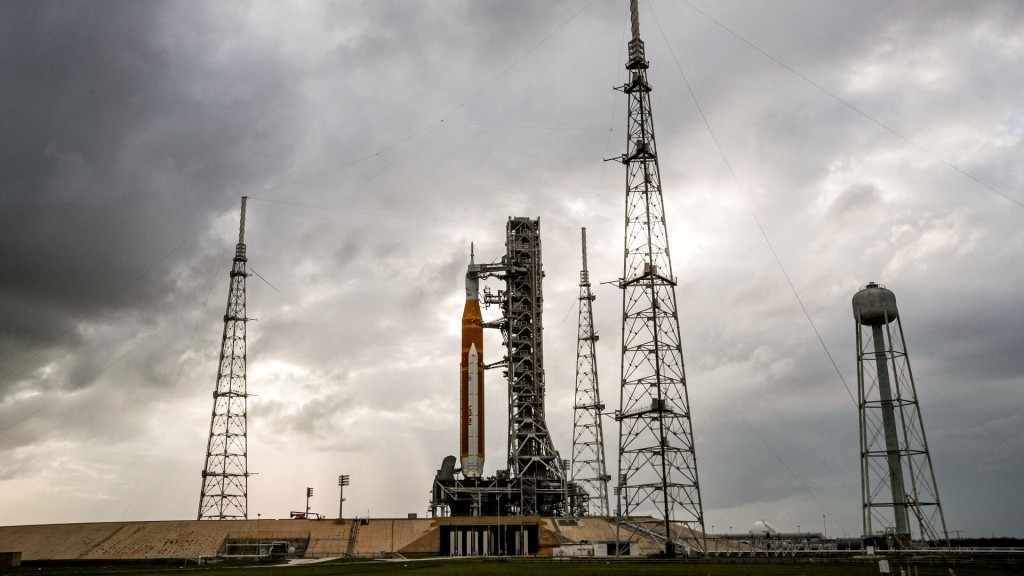
NASA has launched the first crewed mission toward the moon in more than half a century, marking the United States’ boldest step yet toward returning astronauts to the lunar surface. Artemis II lifted off from Kennedy Space Center in Florida at 6:35 p.m. EDT on April 1, 2026, carrying four astronauts aboard NASA’s Space Launch System rocket and Orion capsule. The mission is the first time humans have traveled beyond Earth orbit toward the moon since the Apollo era, and it serves as a major test for NASA’s broader Artemis program, which aims to establish a long-term human presence on and around the moon.
The crew includes NASA astronauts Reid Wiseman, Victor Glover, and Christina Koch, along with Canadian Space Agency astronaut Jeremy Hansen. The four-person team is expected to spend nearly 10 days in space, flying around the moon and back without landing. Their mission is to test the Orion spacecraft and the Space Launch System in a real crewed deep-space environment before future lunar landing missions. Shortly before launch, Hansen told mission control, “we are going for all humanity,” underscoring the international and symbolic significance NASA attached to the flight.
Artemis II is being described as a dress rehearsal for NASA’s next steps. The mission is the first crewed test flight of the Artemis program, which was established in 2017 as the successor to the Apollo project. NASA now hopes to land astronauts near the moon’s South Pole later this decade, after one additional crewed mission around the moon. The current target is Artemis IV in 2028, following a decision by NASA Administrator Jared Isaacman to insert an extra test mission before the first lunar landing. That adjustment reflects both the complexity of the program and the caution required for human deep-space exploration.
The mission also unfolds in the context of a strategic competition with China. NASA is seeking to return humans to the moon before China completes its own first crewed lunar landing, which Beijing is targeting as early as 2030. That rivalry has added geopolitical significance to Artemis, turning it into more than a scientific or engineering project. It is also part of a broader contest over leadership in space exploration, technology, and long-term presence on the moon.
Technically, Artemis II is a major milestone for NASA and its contractors. After more than a decade of development, the launch provided long-awaited validation for the Space Launch System, with an estimated at roughly $2 billion to $4 billion per launch. A few hours after liftoff, the SLS upper stage successfully separated from Orion, and the astronauts began an early maneuvering test to show they could manually steer the spacecraft if automated systems failed. The flight will send the crew about 252,000 miles into space, farther than any humans have ever traveled. That would surpass the Apollo 13 record of about 248,000 miles set in 1970.
The launch is also politically meaningful for NASA itself. The mission comes after the agency lost about 20% of its workforce during federal downsizing last year, making a successful Artemis II mission especially important as a public demonstration of capability and momentum. President Donald Trump praised the crew in a national address, calling them “brave people.”
Overall, Artemis II is not yet a moon landing, but it is a historic return to human deep-space travel. By sending astronauts around the moon for the first time in 53 years, NASA is testing the hardware, the crew systems, and the operational experience needed for future landings. If the mission succeeds, it will strengthen the case that the Artemis program can move from symbolic ambition to sustained lunar exploration.