Massachusetts ZIP Code Emerges as America’s Hottest Housing Market
· 3 min read
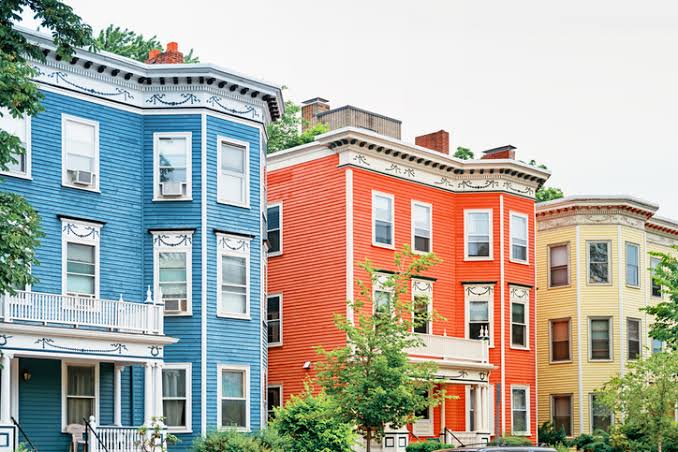
While much of the U.S. housing market has slowed under the pressure of high mortgage rates and affordability challenges, certain communities remain intensely competitive. At the top is ZIP code 01960 in Peabody, Massachusetts, which Realtor.com identified as the hottest housing market in the country based on strong buyer demand and the speed at which properties attract buyers.
Peabody, located north of Boston, illustrates an important trend reshaping American real estate: buyers are increasingly searching for communities that combine suburban space, access to major employment centers and comparatively attainable home prices. With purchasing a house in many desirable parts of the Boston metropolitan area becoming prohibitively expensive, places such as Peabody can offer families an alternative without requiring them to abandon the region entirely.
MarketWatch illustrates the intensity of the competition through the experience of Cameron and Hannah Zirpolo, who wanted to move from their two-bedroom condominium in nearby Danvers into a larger property suitable for their toddler and dog. Their search lasted approximately five months and involved nearly 15 open houses and six offers before they successfully purchased a home. Their experience demonstrates how challenging buying can remain in the country’s most desirable pockets even as the national market becomes less frantic.
High demand is the primary reason Peabody’s 01960 ZIP code secured the top position. The ranking evaluates local housing markets using measures that capture both how much attention listings receive from prospective buyers and how rapidly properties move through the market. In other words, a “hot” ZIP code is not necessarily the country’s most expensive location; it is an area where unusually strong demand meets relatively limited available inventory.
That distinction is important in today’s housing environment. Nationally, buyers have been struggling with elevated mortgage rates, expensive properties and monthly payments that are considerably higher than they were several years ago. These conditions have weakened sales activity across many regions. But they have also made relative affordability increasingly valuable. Buyers who cannot afford the most expensive neighborhoods are expanding their searches into surrounding suburbs where their budgets can purchase more space.
Peabody benefits from that dynamic because it provides access to the broader Boston economy while offering a suburban environment attractive to families seeking additional room. Competition from buyers leaving more expensive communities can then intensify demand for the limited number of houses available locally.
The trend is not confined to Massachusetts. Buyers appear willing to compromise on location or commute times when doing so gives them access to larger homes, attractive neighborhoods and prices below those found in nearby premium markets.
This pattern also reflects the continuing effects of America’s housing shortage. Many existing homeowners purchased properties or refinanced mortgages when interest rates were exceptionally low. Selling those homes would often require taking out a new mortgage at a substantially higher rate, discouraging owners from moving. That phenomenon restricts the number of properties entering the market and can intensify competition in neighborhoods where buyer interest remains strong.
For sellers in places such as Peabody, these conditions can create significant advantages. Strong demand and limited inventory can produce quick sales and competitive offers. Buyers, meanwhile, may need to act rapidly, obtain mortgage preapproval before shopping and prepare for competition when attractive properties reach the market.
Peabody’s rise therefore tells a broader story about the fragmentation of the U.S. housing market. National statistics may indicate slower activity, but conditions differ dramatically by community. Some locations are experiencing longer selling times and greater negotiating power for buyers, while highly desirable and relatively affordable suburbs continue to generate intense competition.
Overall, ZIP code 01960 demonstrates that America’s housing market has not simply become “hot” or “cold.” Instead, demand is concentrating in communities where buyers believe they can still find the right combination of affordability, space and location. For families priced out of more expensive metropolitan neighborhoods, those areas have become increasingly attractive—and that migration is creating some of the country’s fiercest housing competition.