
Conservative podcaster and former government adviser Katie Miller is facing scrutiny over her extensive criticism of major artificial-intelligence companies after financial disclosures revealed that she owns a substantial stake in Elon Musk’s xAI, one of their most important competitors.
According to data, Miller spent roughly nine months repeatedly criticizing ChatGPT, OpenAI, Anthropic’s Claude and Google’s Gemini on social media. Her posts accused the technologies of problems ranging from political bias and inadequate security to potential risks for children.
What Miller did not routinely disclose to her audience was her own financial relationship with xAI.
A financial disclosure released by the White House detailing the finances of her husband, White House Deputy Chief of Staff Stephen Miller, showed that Katie Miller had acquired a significant investment in Musk’s AI company.
The filing indicates she purchased xAI shares on December 19, 2025, after beginning consulting work for the company months earlier. At the time of purchase, the shares were valued between $500,000 and $1 million, although subsequent corporate developments may have increased their value substantially.
Miller’s social-media behavior changed dramatically around the period of the investment.
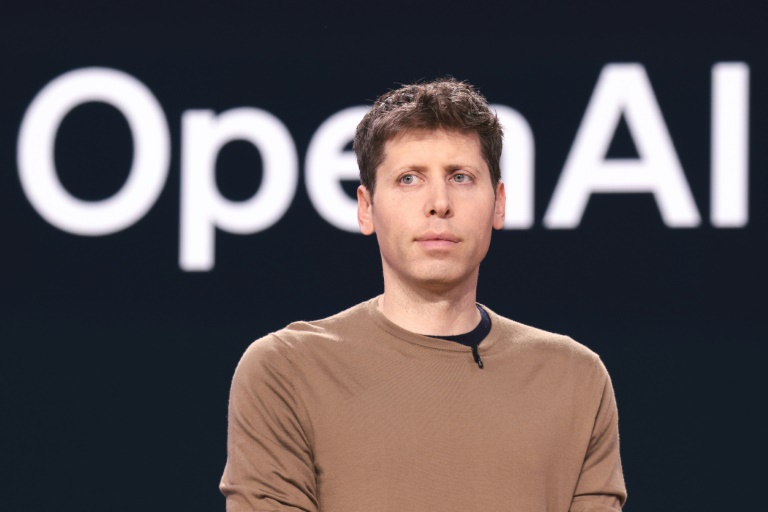
During the nearly nine months after she acquired the shares, Miller shared posts mentioning ChatGPT, OpenAI or CEO Sam Altman more than 400 times, with almost all of them negative. She also posted negatively about Anthropic dozens of times and Google’s Gemini more than 30 times.
Meanwhile, her treatment of xAI and its chatbot Grok was overwhelmingly favorable. Miller posted about them more than 160 times, frequently highlighting the company’s growth, recommending Grok and encouraging people to use the service.
Before acquiring the xAI investment, Miller had rarely discussed those competing AI companies.
Miller rejects the suggestion that her financial interests influenced her commentary. She said that she was not being paid to make the posts and defended her right to own stock while expressing her personal opinions.
Her relationship with Musk, however, extends beyond her investment.
Miller previously served as an important adviser to Musk while he was working with the Trump administration’s Department of Government Efficiency, or DOGE, in 2025. After Musk left government, Miller continued working with him in the private sector before launching her own conservative podcast. She also moved into a consulting relationship with xAI.
The controversy therefore raises broader questions about the increasingly complicated intersection between political influence, social-media commentary and corporate financial interests.
Influencers and podcasters have become increasingly important players in Washington, sometimes reaching political audiences that traditional lobbyists and corporate communications campaigns struggle to access. Miller’s podcast has featured senior administration figures, giving her influence that extends beyond the size of her social-media following.
The disclosure question is particularly important because federal guidelines generally require influencers to clearly reveal material relationships with companies when making endorsements.
Legal experts argued that ownership of a substantial financial stake could represent information audiences should know when evaluating a recommendation. However, FTC Chairman Andrew Ferguson disputed the implication that Miller’s reported behavior violated laws enforced by his agency, publicly defending her after media reports started appearing.
Stephen Miller’s government position adds another layer to the issue.
The financial disclosure states that he has been recused from official government actions involving his wife’s xAI holdings and employment, an effort intended to separate his White House responsibilities from her financial interests.
The story also illustrates how rapidly the battle for dominance in artificial intelligence has moved beyond Silicon Valley.
OpenAI, xAI, Anthropic and Google are competing not only for users and technological leadership but also for influence over regulation, government contracts and public perceptions about AI safety and political bias.
High-profile political personalities can consequently play an increasingly significant role in shaping those perceptions.
For Miller, the central controversy is not simply whether she is entitled to criticize OpenAI or promote Grok. The more consequential question is whether audiences should have been clearly informed that she had a substantial financial relationship with the company that could benefit from those opinions.
Her case therefore reflects a larger challenge emerging in the modern political-media ecosystem: as the boundaries between influencer, consultant, investor and political insider increasingly overlap, determining when financial interests should be disclosed becomes considerably more important.
In the rapidly escalating AI competition, public debate is no longer being shaped only by engineers, executives and regulators. Investors, political influencers and people with direct access to government are becoming increasingly powerful participants—and their financial connections are likely to face growing scrutiny.