Kushner Opens a Quiet Channel to Democrats as Battle for the House Intensifies
· 3 min read
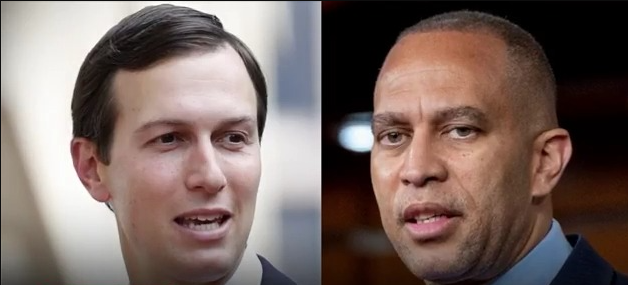
Jared Kushner, President Donald Trump’s son-in-law and influential outside adviser, recently held a private meeting in New York with House Democratic Leader Hakeem Jeffries, an unusual encounter that comes as both parties prepare for a highly competitive fight over control of Congress in the November 2026 midterm elections. The meeting suggests that figures close to Trump are beginning to consider how the White House might operate if Democrats regain control of the House of Representatives.
According to the Associated Press, Kushner and Jeffries discussed several issues affecting American voters, including housing, immigration and the high cost of living. Economic concerns remain central to the midterm campaigns, with Democrats arguing that Republicans and the Trump administration have failed to sufficiently reduce the financial pressures facing households.
One particularly significant element of the conversation was Kushner’s suggestion that Jeffries meet with White House Chief of Staff Susie Wiles as a follow-up. That proposal indicates a potential effort to establish communication between the administration and Democratic leadership before the election determines which party will control the House.
Jeffries would be positioned to become Speaker of the House if Democrats win the majority in November. Although he did not publicly discuss the private meeting in detail, Jeffries subsequently argued that Republicans need to abandon what he described as an uncompromising governing approach and demonstrated that Democrats remain prepared to oppose administration policies they consider extreme.
The meeting is politically important because Republicans currently hold only a narrow House majority. The midterm outcome is expected to depend on a relatively small number of competitive districts across the country. Historically, the president’s party frequently loses congressional seats during midterm elections, creating additional pressure on Republicans as they attempt to maintain control.
Republican House Speaker Mike Johnson sought to minimize the significance of the Kushner-Jeffries conversation. Johnson said Kushner is not directly involved in the administration’s day-to-day White House operations and expressed confidence that Republicans will retain control of the chamber. Still, the private outreach highlights concerns within Republican circles about the possibility of losing the House.
Kushner is particularly well positioned to serve as an informal intermediary because he and Jeffries have worked together before. During Trump’s first administration, the two cooperated on criminal-justice legislation that gave judges greater sentencing flexibility for certain drug offenses. Although they are not considered close political allies, they have maintained a working relationship despite years of confrontations between Trump and Democratic congressional leaders.
Kushner also continues to play a considerable role in Trump’s second administration despite holding no formal White House position. He has served as an outside adviser and diplomatic envoy, particularly on international issues. His ability to communicate with political figures outside Trump’s immediate coalition makes him a potentially useful bridge when the administration needs relationships that extend beyond Republican leadership.
The consequences of a Democratic House victory could be substantial. Democrats have indicated that they would pursue aggressive congressional oversight of the administration. Committees controlled by Democrats could launch investigations, issue subpoenas and scrutinize Trump administration officials and policies much more aggressively than the current Republican-controlled House. Impeachment would also remain among the constitutional tools available to a Democratic majority, though using it would depend on future circumstances and political decisions.
A shift in congressional control would therefore dramatically alter Trump’s governing environment. During much of his second term, the president has relied on executive authority and a Republican-controlled Congress that has generally supported his nominees and major priorities. A Democratic House could block legislation, intensify investigations and force the administration into negotiations on government funding, immigration, housing and other major policies.
The Kushner-Jeffries meeting does not represent a political alliance, nor does it guarantee bipartisan cooperation after the election. Instead, it appears to reflect political preparation for an uncertain outcome. With House control potentially hinging on only a handful of battleground districts, both sides recognize that Washington’s balance of power could look very different after November.
The private conversation therefore carries significance beyond the individuals involved. It suggests that Trump’s circle is already preparing for the possibility of divided government—and quietly establishing lines of communication with the Democrat who could soon become Speaker of the House.