The United States and Japan have reached an agreement on how they would divide responsibilities in a potential joint nuclear power project that could involve American reactor builder Westinghouse and major Japanese equipment manufacturers. The arrangement is still described as “potential,” but the fact that both governments have aligned on roles signals momentum—and suggests the project is moving from broad political intent toward operational planning.
PWestinghouse’s Dan Lipman said the two governments agreed not only on their respective roles but also on how parts of the supply chain inside Japan could support the effort. That matters because large nuclear projects succeed or fail on industrial execution: forging, heavy components, specialized manufacturing, quality control, and long-lead procurement. By clarifying which country handles what—and how Japan’s industrial base plugs in—the parties are trying to reduce uncertainty that often slows early-stage nuclear deals.
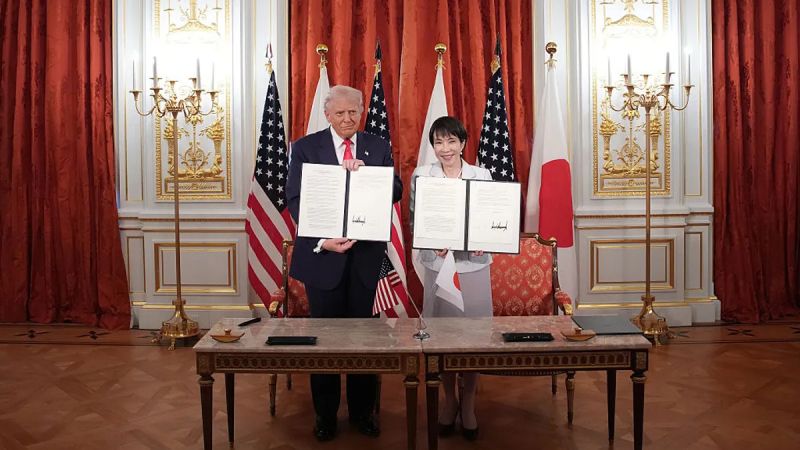
The project is linked to Japan’s much larger economic pledge to the U.S. Apparently, Japan and the U.S. were considering adding a nuclear power project to the second phase of Japan’s $550 billion investment package, with discussions happening in parallel to trade and energy-security negotiations. In that earlier reporting, sources also said a potential announcement could be timed around a Trump–Takaichi summit, underscoring that the nuclear plan is part of a broader diplomatic and economic bundle—not a standalone commercial transaction.
Westinghouse’s ambitions also show the scale of what’s being contemplated. The company—backed by Cameco and Brookfield—is exploring development of both pressurized water reactors and small modular reactors (SMRs), with potential investment needs that could reach up to $100 billion. It signals that Westinghouse is pitching a portfolio approach: proven large reactors for baseload power alongside smaller designs meant to be built faster and replicated across sites.
Japanese industry participation is a key pillar. Companies such as Mitsubishi Heavy Industries, Toshiba, and IHI are expected to be involved—firms with deep experience in heavy manufacturing, turbines, and nuclear-adjacent components. For Japan, which has been navigating domestic energy security challenges for years, this kind of collaboration offers a way to strengthen domestic industrial capability while also aligning strategically with the U.S. amid global concern about reliable power supply.
The timing is also shaped by a wider global shift: governments are reassessing nuclear power as a tool for energy security and for providing steady electricity as demand rises from electrification and data-center growth. This broader momentum is driving new cross-border partnerships—illustrated by GE Vernova and Hitachi planning cooperation on BWRX-300 SMR projects in Southeast Asia. In that context, the U.S.–Japan roles agreement looks like part of a bigger wave of “industrial diplomacy” around nuclear supply chains.