Virginia Discovery Reveals Forgotten Camp of French Troops Who Helped Win America’s Revolution
· 2 min read
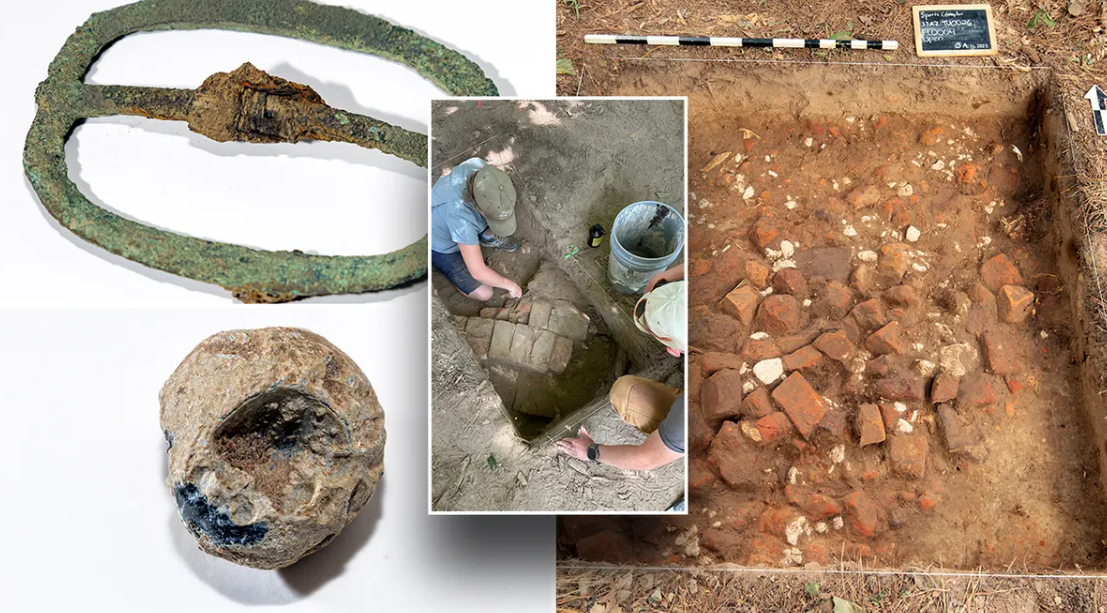
A search for Civil War artifacts in a Virginia farm field unexpectedly uncovered something much older and rarer: evidence of a French military encampment from the Revolutionary War. Relic hunters Lafayette “Scotty” Crabtree Jr. and Greg Lagasse were searching land south of Fredericksburg when their metal detectors found small buttons near a creek. The buttons looked unusual, with delicate numbers on the front and different mounts on the back. After researching them online, the men realized they had found 244-year-old French military buttons.
The discovery is historically significant because French troops played a crucial role in helping the American colonies defeat Britain, but physical traces of their movements through Virginia are rare. No other French Revolutionary War encampment has been thoroughly documented in Virginia, making this site especially valuable for historians and archaeologists. Only one comparable French march encampment has been fully surveyed and excavated in Connecticut.
The site appears to have been used in 1782, after the decisive American and French victory at Yorktown. French soldiers were traveling north to rejoin Gen. George Washington in New York after helping trap British forces under Lord Cornwallis in Virginia. The camp, located on a sloping cornfield that has changed little since the 18th century, offers a rare physical connection to that post-Yorktown march and to the international alliance that helped secure American independence.
The artifacts found at the site go beyond the French buttons. Crabtree and Lagasse also discovered Spanish and English coins dating from the early 1700s, suggesting the area may have been used or traveled through long before and during the Revolutionary period. Together, the objects help build a picture of military movement, supply, trade, and daily life in a landscape often associated more with the Civil War than with the American Revolution.
The find also shows how amateur relic hunters can sometimes make discoveries that reshape local history. Virginia fields are often searched for bullets, belt buckles, and other Civil War remains, but this discovery pushed the story back to the founding era. Instead of another reminder of the 1860s, the site revealed a forgotten moment from the 1780s, when French soldiers were moving through Virginia after helping the United States win its independence.
The timing adds symbolic weight. As the United States approaches the 250th anniversary of the Declaration of Independence, museums, historic sites, and communities around Virginia and the Washington region are preparing exhibitions and programs focused on the Revolution. A newly documented French camp gives historians another way to tell the story of America’s founding as an international effort, not only a domestic rebellion.
Overall, the Virginia discovery is important because it makes a largely invisible chapter of the Revolutionary War tangible. The buttons, coins, and campsite show that French support for the American cause was not abstract diplomacy; it was made up of real soldiers marching, camping, and enduring hardship on American soil. More than two centuries later, a handful of small artifacts has reopened a forgotten trail of the French army’s role in creating the United States.