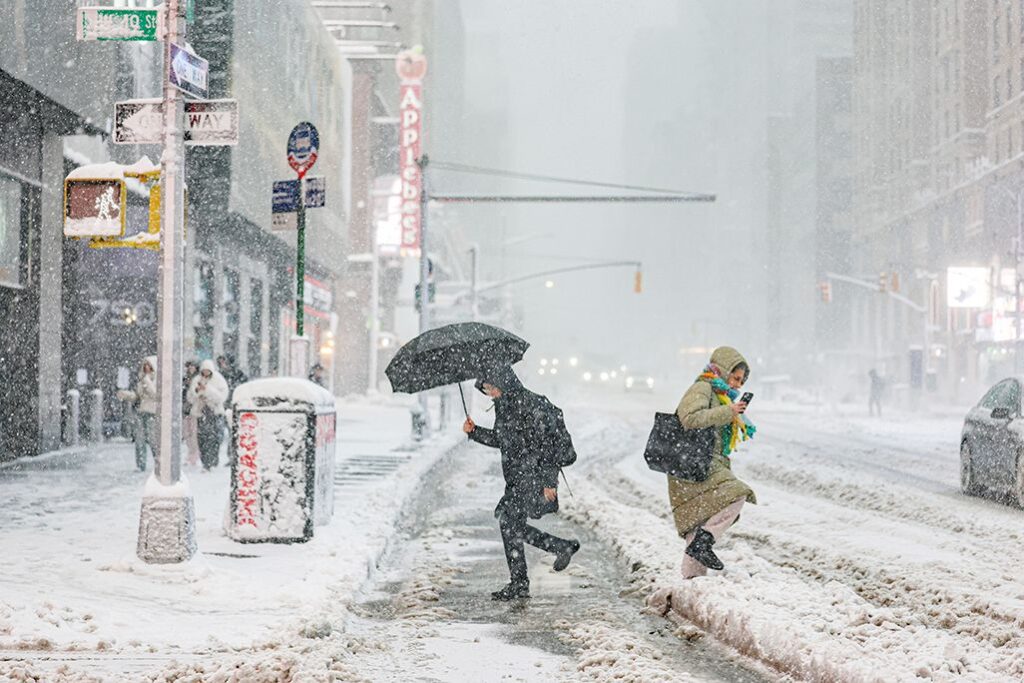
A sprawling, high-impact weather system pushed more than half of the United States into overlapping threats—blizzards, damaging winds, severe storms and unusual heat—creating a rare “everything at once” scenario that disrupted travel, closed schools and prompted emergency preparations across multiple regions. The extreme conditions stretched from a surprising California heatwave to Upper Midwest blizzards and stormy, wind-driven hazards rolling toward the East Coast.
In the Midwest and Great Lakes, heavy snow and strong winds produced hazardous road conditions and near-whiteout visibility. Parts of Wisconsin and Michigan were buried, with some locations reporting up to three feet of snow, and forecasters warned that additional rounds could add more accumulation—especially in northern Michigan. Transportation officials warned drivers that conditions would worsen as winds increased and roads became snow-covered.
As the system advanced east, attention shifted to a corridor from the mid-Atlantic into the Northeast where meteorologists warned of high winds, heavy rain and the potential for tornadoes. In Washington, D.C., the threat triggered early closures and schedule changes: federal agencies told workers to leave early, and the House and Senate postponed votes. By late afternoon, however, some of the worst feared impacts around Washington did not fully materialize, and a tornado watch expired.
The storm’s breadth was reflected in air travel disruptions. In case, more than 4,700 flights were canceled across the U.S., with additional delays piling up at major hubs as airlines and airports managed shifting conditions and safety constraints. Schools also closed early in parts of the mid-Atlantic ahead of the expected winds and storms.
At the same time, other regions faced different—but equally serious—hazards. In Hawaii, torrential rain led to flooding that damaged homes and washed out roads, with extremely heavy rainfall totals in parts of Maui. Meanwhile, in Nebraska, dry and windy conditions put state as the largest wildfire on record, illustrating how the same storm system can produce fire weather in one area while dumping snow in another.
Out West, the pattern flipped again: a heat dome drove unusually hot temperatures, with triple-digit heat expected in California and the Southwest—an early-season level of heat that forecasters described as abnormal. The national setup is a sweeping collision of air masses and pressure systems producing rapid swings and multiple extremes at once.
Overall, the story underscores how modern weather events increasingly create compound risks: the same broad system can strain infrastructure, emergency services, and transportation simultaneously across distant regions—making it harder for communities to absorb impacts one at a time.